

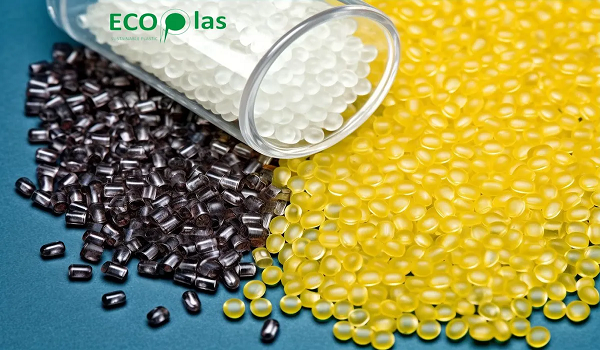
In a significant step toward driving sustainability in India’s packaging industry, the Plastic Packaging Research and Development Centre (PPRDC) released a pioneering study on the safe use of recycled polypropylene (rPP) in food-grade packaging. The announcement was made at the 6th PPRDC Summit held in New Delhi on June 16, 2025, where leading policymakers, brand owners, recyclers, and packaging experts converged to align on future strategies for circular plastic packaging solutions.
The highlight of the summit was the launch of a comprehensive research report titled “Recycling of Post-Consumer Food-grade Polypropylene (PP) Waste: Sustainable Valorization of Recycled PP Material.” The study provides a scientific, technical, and regulatory framework to incorporate up to 60% post-consumer rPP into the core layer of multi-layered flexible packaging used for food contact materials, without compromising on food safety.
Despite polypropylene (PP) being the second-most widely produced plastic globally, India’s recycling rate remains alarmingly low at 3–5%. The report addresses this challenge with cutting-edge decontamination and double-filtration technologies that ensure compliance with international food safety norms, including US FDA standards. It also proposes integrating rPP in a way that separates it from the direct food contact layer, mitigating any safety risks.
The summit witnessed participation from key regulatory and industry stakeholders, including the Department of Chemicals & Petrochemicals, BIS, FSSAI, and companies such as Reliance Industries, Tata Consumer Products, Dabur India, Nestlé India, Jubilant FoodWorks, Coca-Cola India, PepsiCo India Holdings, Tops, Mars India, and UFlex.
Deepak Mishra, Joint Secretary at the Department of Chemicals and Petrochemicals, Government of India, stressed the importance of moving beyond PET recycling to include PE and PP materials. He noted that recent policy exemptions were introduced to accommodate technical challenges and urged the industry to proactively develop safe and standardized recycling practices for PP.
Prabh Das, MD and CEO of HPCL-Mittal Energy (HMEL), called for clarity in regulatory frameworks. “We urge industry leaders to initiate guidelines for materials not yet covered under the current policy. This will boost confidence and accelerate the transition to circular packaging,” he said.
Jacob Duer, President and CEO of the Alliance to End Plastic Waste, emphasized India’s potential to lead the global sustainability charge: “India’s policies, innovation ecosystem, and scale position it at the forefront of the circular economy. Partnerships and investments must now drive scalable impact.”
Ashok Chaturvedi, Chairman and Managing Director of UFlex, delivered a stirring call for voluntary industry action:
“Let’s stop viewing sustainability as a regulatory burden and start seeing it as a business imperative. We don’t need to wait for rules to push us—we must act because it matters.”
Echoing this sentiment, Jeevaraj Gopal Pillai, Trustee at PPRDC and Director at UFlex, highlighted their use of recycled PE and PP in non-contact layers through co-extrusion techniques. “These innovations meet EPR mandates while preserving food safety,” he said, pointing to AI-enabled sorting and robust decontamination as crucial technological enablers.
Mihir Banerji, Secretary General of PPRDC, emphasized the opportunity India has to establish first-of-its-kind regulatory norms for food-grade rPP:
“There are currently no explicit rules, and that’s an opportunity. With science-backed standards, we can lead globally while reducing our dependence on virgin plastics.”
The report and summit discussions directly align with India’s Plastic Waste Management Rules and Extended Producer Responsibility (EPR) mandates. These regulations require 20% recycled content in flexible plastic packaging and 10% in multilayered formats by 2027–28. The study provides practical strategies to meet these targets while ensuring material quality and food safety.
By promoting a closed-loop recycling model, the initiative also addresses the rising demand for sustainable materials, catering to consumers increasingly conscious of environmental impact. For brand owners, integrating food-safe rPP provides a dual advantage: fulfilling EPR mandates and enhancing brand equity through sustainable practices.
The PPRDC Summit emerged as a milestone moment in India’s sustainability journey, signaling industry readiness to tackle the complex challenges of food-grade plastic recycling. Discussions emphasized that regulatory support, technological advancement, and industry-wide collaboration must converge to unlock the full potential of rPP and other recycled plastics.
With the momentum generated at the summit and the actionable roadmap presented in the PPRDC study, India’s packaging ecosystem is poised to move closer to its circular economy vision—one layer of safe, sustainable plastic at a time.