

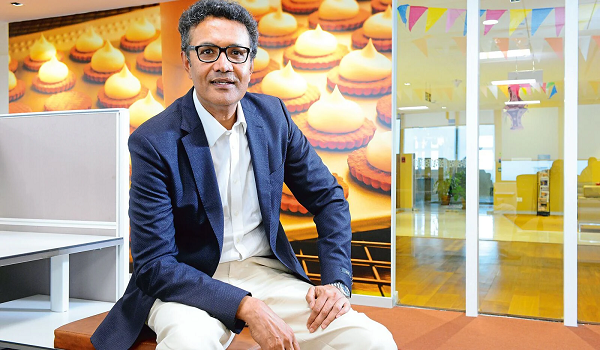
Facing intensifying competition from regional players, Britannia Industries is adopting a localized strategy, treating India as a collection of multiple markets rather than a single country, to maintain its competitive edge, Vice Chairman & Managing Director Varun Berry said.
The maker of iconic brands such as Good Day, Marie Gold, and Tiger biscuits will focus on leveraging its brand strength, execution capabilities, and extensive network of 70 factories and nationwide distribution, instead of engaging in price wars. “We have got brands that have been established as early as the last century. These are deeply entrenched with consumers, which gives us a big advantage, along with localised factories and teams”, Berry told PTI.
Britannia has long prioritized cost optimization, achieving roughly 2% of revenue savings annually for the past 13 years. Berry noted that commodity inflation on input materials is currently stable, expected to remain within the manageable limits of 3–5%. “We can manage that very well,” he said.
On the threat posed by new regional players, Berry said most of these entrants do not survive long-term due to unviable profitability. However, Britannia continues to monitor them closely and adopt a localised approach to compete effectively in each market. “One India has many Indias in it, and that is how we want to see it. This helps us take the right corrective actions against regional players,” he added.
Earlier this year, Berry had indicated that with a “war chest” ready, Britannia is prepared to “fight many battles in smaller territories” against local rivals.
Regarding product growth, Berry said Britannia is consolidating its existing categories before launching new ones. The company has seen strong performance in adjacent categories such as rusk, wafers, croissants, and milkshakes, while some areas require faster growth. “We will nurture the categories that we are already in. Thereafter, we have a lot of categories in the pipeline,” he said.
On the dairy front, Berry acknowledged that Britannia’s milk business has “not done as well as we had imagined,” but turnover has grown from about ₹400 crore to ₹700 crore over the past four to five years. The company maintains high aspirations for the segment.
Regarding capital expenditure, Berry said this year’s investment will be lower than in previous years, as Britannia has already invested in several plants. “We have got some headspace, and we want to run that headspace out completely before we make the next wave of investments,” he explained.
With its scale, established brands, cost optimization, and localized approach, Britannia aims to maintain profitability while fending off regional competition without engaging in disruptive price wars.