

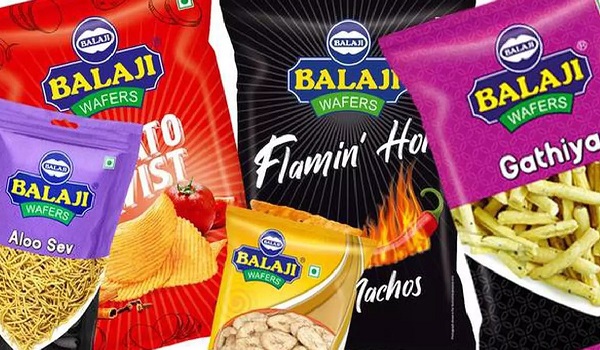
India’s snack sector is witnessing another high-stakes corporate battle. Homegrown conglomerate ITC and global food-and-beverage giant PepsiCo, along with private equity majors such as TPG and Temasek, are in the race to acquire a 10% stake in Balaji Wafers, valuing the Rajkot-based snack maker at nearly ₹40,000 crore, according to people familiar with the matter.
The discussions are still at an exploratory stage, with both strategic investors and private equity players being tapped. Some interested parties, insiders said, are even considering taking a larger slice beyond the 10% initially on offer.
PepsiCo’s Second Attempt
For PepsiCo, this marks the second attempt to partner with Balaji Wafers. Back in 2013, the American multinational—then led globally by Indra Nooyi—had explored acquiring a controlling stake of 49–51%. That proposal was turned down by the promoter Virani family, which has remained firm about retaining majority control of the company.
Today, the market dynamics look very different. Regional brands like Balaji have surged in popularity, particularly in western and central India, chipping away at the dominance of larger players. An alliance, even at a minority level, would give PepsiCo much-needed access to Balaji’s deep regional distribution and backend manufacturing capabilities, analysts said.
ITC’s Snack Strategy
For ITC, which entered the snacks market in 2007 with Bingo, the deal could provide a crucial boost. Bingo has struggled to scale up against entrenched competitors, both in potato wafers and ethnic savory snacks. Compared to ITC’s bigger food brands, such as Aashirvaad atta and Sunfeast biscuits, Bingo continues to be a relatively smaller contributor.
By investing in Balaji, ITC could bridge the gap in regional dominance and better position itself against local rivals that are thriving in smaller towns and cities.
Regional Brands on Investor Radar
The move comes at a time when regional snack makers are attracting global capital. In March this year, investors including IHC, Alpha Wave Global, and Singapore’s Temasek together picked up nearly 10% in Haldiram Snacks Food at a valuation of over $10 billion—the largest packaged food deal in India to date.
“Smaller brands are no longer niche players—they are reshaping the snack market,” said an industry executive. “Consumer loyalty in regional markets is shifting toward homegrown favorites, and global giants are realizing they can’t ignore this trend.”
Balaji Wafers’ Strong Financials
Balaji Wafers has been a standout performer. In FY24, the company reported revenue of ₹5,453.7 crore, up 11% year-on-year, while its profit after tax jumped 41% to ₹578.8 crore. The Virani family, which started the business in a small Rajkot canteen before scaling it into one of India’s most formidable snack empires, is reportedly considering professionalising management while retaining control.
This trend mirrors changes at other family-run companies. Earlier this month, Vadilal Industries appointed its first non-family CEO, Himanshu Kanwar, after a restructuring move to separate ownership from management.
A Market Set to Double
According to Imarc Group, India’s snacks market—valued at ₹42,694.9 crore in 2023—is projected to more than double to ₹95,521.8 crore by 2032. With growth being driven by rising urbanisation, premiumisation, and regional flavours, competition for market share is only expected to intensify.
PepsiCo and ITC did not respond to queries, while TPG declined to comment. Temasek also remained unavailable. Chandubhai Virani, founder and managing director of Balaji Wafers, could not be reached.
The Bigger Picture
As PepsiCo sharpens its global focus on snacks and ITC seeks to diversify beyond cigarettes, both companies see Balaji as a strategic gateway to India’s next billion snacking consumers. Whether the Virani family agrees to let them in this time could reshape the pecking order of India’s ₹40,000 crore snack industry.