

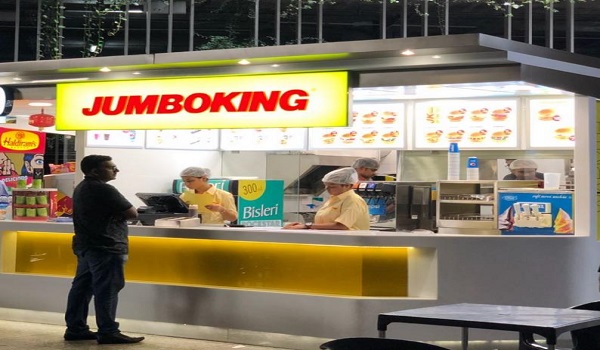
Homegrown quick service restaurant (QSR) chain Jumboking is gearing up for its most ambitious growth phase yet. The Mumbai-headquartered vegetarian burger chain plans to double its business within the next two to three years while also making its international debut in Dubai by December 2025, founder and CEO Dheeraj Gupta said.
Currently operating close to 200 outlets across four cities—including 115 in Mumbai and 45 in Delhi—the brand is looking to deepen its presence in 12 key markets with 300 stores, while also entering 20-30 new Indian cities over the next three years. Expansion will be largely franchise-led, aimed at ensuring operational efficiency and steady scalability.
Lean Model, Big Ambitions
Jumboking has built its strategy around a compact store format of 400–500 sq. ft., which keeps costs lower compared to international QSR giants. Gupta said this lean model allows the chain to offer competitive pricing without compromising quality, as suppliers are largely the same as those of global brands.
The company expects to double revenues every 2–3 years, translating into a CAGR of 26–42%, driven by its disciplined, non-cash burn approach. Gupta emphasised that Jumboking has been profitable for over a decade and is not seeking fresh capital, though secondary transactions may be possible for existing investors.
Competing with Global Players
Positioned as a fully vegetarian QSR, Jumboking is carving out an identity by focusing on Indian taste preferences. Consumer studies, Gupta noted, highlight three key differentiators:
A better understanding of Indian palates,
A wider vegetarian range, and
A value-for-money proposition compared to international rivals.
On delivery platforms, the company sees mixed dynamics. At transit-heavy outlets, deliveries contribute only 7–10% of sales, while at sit-down stores, the figure rises to nearly one-third. Gupta said food delivery apps like Swiggy and Zomato remain cost-efficient despite commissions, as they are cheaper than running in-house fleets.
The chain also benefits from its loyalty programme, which has over 1.5 million members, providing critical insights into customer behaviour and preferences.
Navigating GST & Policy Hurdles
Commenting on the GST regime, Gupta said that excluding the restaurant sector from input tax credit (ITC) continues to hurt operators. “Our effective tax rate remains at 5%, so we don’t gain much from recent changes. Allowing ITC would align with the original GST intent and provide meaningful relief,” he said.
Dubai: The Global Test Case
Jumboking’s international foray will begin with Dubai, where it plans to open its first outlet by December 2025 under a master franchise agreement. The goal is to establish 10 profitable stores in the emirate before venturing into other overseas markets.
Gupta said the company ultimately aspires to be the world’s first fully vegetarian or vegan burger chain, using Dubai as a proof-of-concept market. “Dubai will be our pilot. If successful, it will give us the credibility to expand globally,” he added.
With India’s QSR market becoming increasingly competitive, Jumboking’s dual strategy—scaling aggressively at home while testing global waters—signals the rise of Indian-born food brands looking to claim a spot on the international stage.