

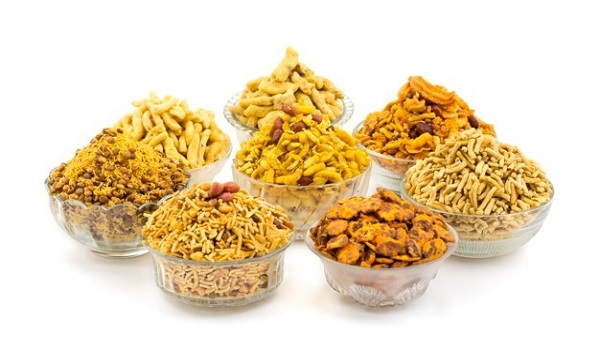
India’s festive season is crackling with competition. The country’s ₹46,571-crore snacks market has become a fierce battlefield this Diwali, as legacy giants such as Haldiram’s, Balaji Wafers, and Bikaji face off against a new generation of startups promising “clean,” “mindful,” and “modern” indulgence.
According to IMARC, the Indian snacks industry is poised to more than double to ₹1,01,811 crore by 2033, growing at a compound annual rate of 8.6%. The namkeen segment alone is expected to add nearly $4.5 billion in value by 2029, highlighting the growing appetite for both traditional and reinvented savory delights.
Behind the numbers lies a cultural shift redefining India’s relationship with snacking. While legacy brands have long ruled through affordability, nostalgia, and deep distribution networks, a new consumer generation—young, label-conscious, and social media-driven—is reshaping what “snack time” means.
Haldiram’s continues to dominate with an estimated 13% market share in India’s savory snack space, according to Euromonitor, and is now valued at roughly $10 billion following Temasek’s March investment. Balaji Wafers reported a profit of ₹578.8 crore in FY24 on revenues of ₹5,453.7 crore, while Bikaji Foods is expanding its reach to 3.5 lakh retail outlets.
Meanwhile, startups like Farmley, TagZ, Bonvie, and Too Yumm! are carving out space in the “clean snacking” niche. Farmley, founded by IIT alumni Akash Sharma and Abhishek Agarwal, is leading the charge with its premium, ingredient-first approach. “Consumers are choosing premium, thoughtful, and healthier gifts over traditional sweets,” Sharma said, pointing to Farmley’s new festive lineup featuring roasted makhana assortments and the Serenity Gift Box.
Farmley’s strategy merges farm-to-fork sourcing with premium packaging and a strong digital presence. The brand is targeting both metropolitan areas and Tier 2/3 cities, where aspirations and awareness about healthier snacking are rising rapidly.
Bonvie founder Atul Gupta echoed the sentiment, saying the company’s air-fried vegetable chips and freeze-dried fruit snacks aim to prove that “healthy can be exciting too.” Similarly, Khetika co-founder Dr. Prithwi Singh focuses on transparency in sourcing, while SuperYou’s Nikunj Biyani is tailoring high-protein chips for Gen Z snackers who “want to snack better without compromise.”
Industry analysts note that the rise of new-age snack makers doesn’t threaten traditional dominance but diversifies the market. Regional heavyweights like Balaji (Gujarat) and Bikaji (Rajasthan) continue to build on strong local identities. At the same time, global players are circling the sector—General Mills Inc is reportedly in talks to acquire a stake in Balaji Wafers, following similar interest from PepsiCo and ITC.
For investors, the appeal lies in India’s unique mix of emotional connection, affordability, and scale. Even during economic downturns, snacks remain a household essential. Temasek’s investment in Haldiram’s and General Mills’ interest in Balaji highlight the growing international appetite for Indian flavour-driven brands.
Data from Farmley’s Healthy Snacking Report 2025 reveals that 55% of Indian consumers now prefer preservative-free snacks, while 52% prioritize eco-conscious packaging. The healthy snacking category is reportedly growing 1.2 times faster than traditional snacks. However, startups still face pricing and placement hurdles. “Shelf space is expensive, and big brands dominate,” said Ajay Kangralkar of SkyRoots Ventures, which makes millet-based baked snacks.
This year’s Diwali gifting baskets capture the transformation perfectly. Legacy brands are rolling out festive namkeen assortments, while digital-first brands are offering sleek dry fruit and makhana boxes for premium gifting. Quick commerce platforms such as Blinkit and Swiggy Instamart have accelerated discovery, giving young brands instant nationwide visibility.
In the same household, a box of Bikaji Bhujia may now sit beside a Farmley Makhana tin. The old guard sells nostalgia; the new guard sells aspiration. And both are thriving in a market large enough to hold the ₹5 wafer pack and the ₹500 gourmet gift box.
India’s snack market, once defined by local fryers and family recipes, is now shaped by e-commerce, packaging aesthetics, and health consciousness. The result is a festive marketplace where every crunch tells a story—of legacy meeting innovation, and tradition blending with reinvention.
This Diwali, India’s snack wars aren’t being fought in factories or boardrooms—they’re being decided in the shopping carts and kitchen shelves of millions of consumers. And in this battle of bhujia versus makhana, every bite counts.