

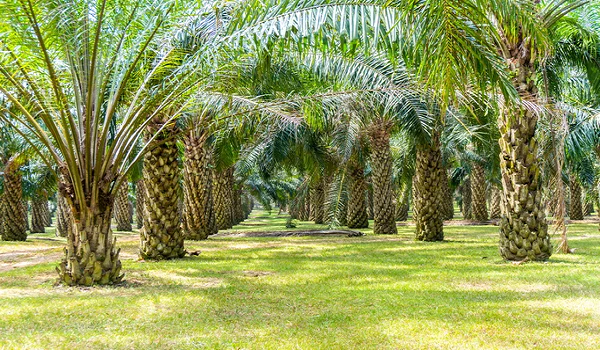
India has expanded oil palm cultivation by 52,113 hectares so far in the current financial year, with Telangana and Andhra Pradesh accounting for the bulk of the new area, according to the Ministry of Agriculture.
The latest addition brings the total area under oil palm cultivation to 2,41,000 hectares under the National Mission on Edible Oils–Oil Palm (NMEO-OP) since its launch in August 2021. Nationwide coverage under the scheme has now reached 6,00,000 hectares.
“Oil palm cultivation is picking up steadily. The acreage has reached 52,113 hectares till October 22 of FY2025-26,” a senior Agriculture Ministry official told PTI.
Among states, Andhra Pradesh contributed 13,286 hectares, followed by Telangana with 12,005 hectares, while the remaining expansion came from Chhattisgarh, Goa, and Gujarat.
Farmers in southern India are increasingly turning to oil palm for its high yield and profitability, often intercropping it with crops like cocoa. The government has also taken steps to boost domestic seed availability, with new seed gardens sanctioned this year to reduce dependence on imported germinated seeds.
Currently, India imports palm seeds, which are grown in nurseries for around 18 months before field transplantation. Efforts to scale up seed production aim to accelerate the country’s oil palm expansion targets.
Under the NMEO-OP scheme, 24 processing mills with a combined capacity of 638.5 tonnes per hour have been approved. The government has set an ambitious goal to bring 2,00,000 hectares under oil palm cultivation during FY2025-26, focusing on Telangana, Andhra Pradesh, Assam, Arunachal Pradesh, Tripura, and Mizoram.
India has identified 2.8 million hectares of land suitable for oil palm cultivation. The crop is known to yield up to 10 times more oil per hectare than traditional oilseeds such as soybean, sunflower, mustard, and groundnut.
With the country importing nearly 57% of its edible oil requirements, of which palm oil forms the largest share, the government’s expansion drive under NMEO-OP is seen as a crucial step toward reducing import dependence and improving domestic edible oil security.