

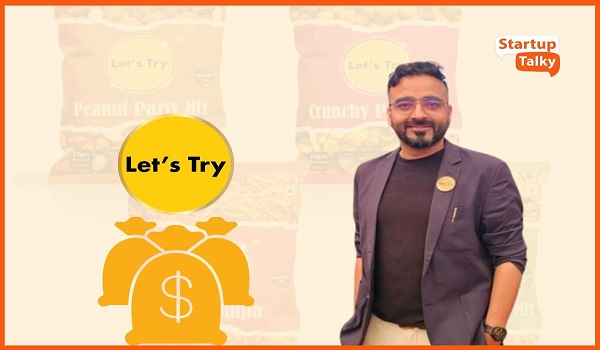
Homegrown snacking brand Let’s Try is targeting ₹1,000 crore in revenue by 2027–28 as it charts an aggressive expansion strategy focused on manufacturing scale-up, wider offline presence and long-term public listing plans, founder Nitin Kalra said.
The four-year-old startup, which gained visibility after appearing on Shark Tank India, expects to close the current fiscal with revenues of around ₹230 crore, up sharply from ₹65 crore last year. Kalra described the growth as exponential, adding that the company is preparing for pre-IPO activities with a view to transitioning into a public limited company by 2028.
To support its expansion, the Delhi-based company plans to invest around ₹100 crore over the next year to set up four new manufacturing facilities across India, significantly higher than its current capital expenditure of ₹15–20 crore. Planned facilities include a unit in Bengaluru by March, another between Mumbai and Pune, and a western India plant focused on exports by the end of the year.
Currently, all production is carried out in-house at Let’s Try’s Delhi facility. Kalra said the company’s manufacturing-led model enables tighter quality control and allows it to use premium ingredients such as groundnut oil instead of palm oil, a key differentiator in the crowded snacking market.
Alongside manufacturing expansion, Let’s Try is recalibrating its sales mix to strengthen offline distribution. While nearly 80 per cent of its revenue currently comes from online channels, the company aims to shift this to a 60:40 online-to-offline split by expanding into general trade, modern retail, railways and airline catering.
The company has also entered foodservice through its first cloud kitchen offering Indian snacks prepared in groundnut oil and ghee, with plans to open more branded outlets next year.
Positioned as a premium yet affordable snacking brand, Let’s Try says it has been profitable since its first year of operations, operating on single-digit margins while reinvesting earnings into research, development and expansion. Kalra said the focus has been on sustainable, capital-efficient growth rather than rapid cash burn.
Despite reported interest from larger legacy players, the company is not pursuing mergers or acquisitions in the near term. “The brand is still young, and there is significant headroom for growth,” Kalra said, adding that the focus remains on building scale independently before exploring strategic partnerships.