

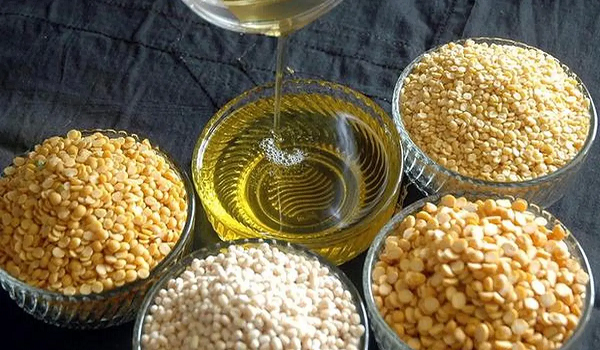
Union Agriculture Minister Shivraj Singh Chouhan on Tuesday called for complete self-sufficiency in food production, urging farmers to scale up cultivation of pulses and oilseeds to reduce India’s reliance on imports.
Addressing a regional agriculture conference in Jaipur, Chouhan emphasized that ensuring food security requires eliminating dependence on overseas supplies. “India must not rely on imports for any food item. The country should meet all its requirements through its own farmers,” he said.
India currently imports nearly 55% of its edible oil needs, while dependence on pulses has risen sharply—from 8% in 2022–23 to 21% in 2024–25—highlighting the urgency of boosting domestic production.
Under the Centre’s Pulses Mission, states have been directed to maximize seed production and ensure the availability of high-quality seeds. The government is offering financial incentives for seed production, including ₹4,500 per quintal for tur (pigeon pea), ₹2,000 for urad, and ₹1,800 for gram.
State-wise targets for subsidized seed distribution have also been set, with Madhya Pradesh, Rajasthan, Maharashtra, and Gujarat receiving the largest allocations. Together, these four states account for over 60% of India’s pulse output. Several high-performing districts—including Narmadapuram (Madhya Pradesh), Jhalawar and Tonk (Rajasthan), Gadchiroli (Maharashtra), and Junagadh (Gujarat)—will be developed as model clusters to drive productivity gains.
The government has also identified dozens of new pulse varieties for rapid inclusion in the seed chain to accelerate yield improvements across regions.
To support farmers’ incomes, Chouhan announced that 100% procurement of key pulses—tur, urad, and masoor—will be undertaken at Minimum Support Price (MSP) from “willing” farmers. However, the inclusion of the term “willing” has drawn criticism from farmer groups, who argue it could dilute procurement commitments compared to wheat and paddy.
Meanwhile, under the National Edible Oil Mission (Oilseeds), oilseed production reached a record 429.89 lakh tonnes in 2024–25, up from 396.69 lakh tonnes the previous year. Productivity also improved from 1.31 tonnes per hectare to 1.41 tonnes per hectare. The government has further expanded oilseed cultivation by bringing an additional 13.35 lakh hectares under the crop through value chain clusters in 2025–26.
Chouhan also outlined plans for state-specific agricultural roadmaps to promote suitable crops and farming practices. He added that a Farmer ID system will be introduced to streamline the delivery of inputs such as fertilisers, seeds, crop insurance, and compensation, ensuring greater transparency and targeted support.