

India’s emerging blueberry industry is gradually moving from experimental cultivation to a commercially promising segment, driven by rising consumer demand for healthy foods, protected farming technologies and premium fruit consumption. According to Hitesh Limani of Agrodome Projects LLP, the sector has witnessed noticeable momentum in the past three years, particularly after the pandemic accelerated interest in nutrition-focused produce.
While blueberries were once almost entirely imported into India, growers across states such as Maharashtra, Karnataka, Himachal Pradesh, Uttarakhand, Madhya Pradesh and Uttar Pradesh are now actively testing domestic production. Farmers are increasingly focusing on low-chill Southern Highbush blueberry varieties that are better suited to Indian climatic conditions.
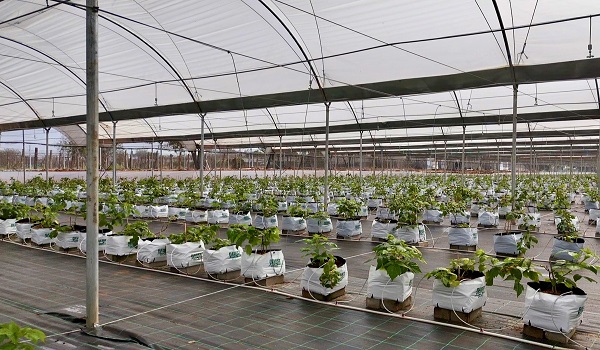
A major shift within the sector has been the rapid adoption of protected cultivation systems like high tunnels and soilless growing media, including cocopeat, coco-chips and perlite. Since blueberries require acidic soil conditions that are rarely available naturally in India, growers are turning toward precision fertigation, irrigation control and root-zone management to improve productivity and fruit quality.
However, the industry continues to face significant operational hurdles. High establishment costs remain one of the biggest barriers, as commercial blueberry farming often requires investment in protected structures, climate management systems and specialized irrigation infrastructure. Rising steel prices and supply-chain disruptions have further increased project costs in recent years.
Knowledge limitations are another key challenge slowing the industry’s expansion. Experts note that India still lacks standardized cultivation protocols tailored to its diverse agro-climatic conditions. Farmers continue to face difficulties in managing pH levels, pruning techniques and fertigation schedules, while the limited availability of trained labour adds further complexity.
Despite these challenges, market demand remains highly encouraging. Blueberries continue to hold a premium position in India’s urban retail market, while the growth of quick-commerce and instant delivery platforms is helping the fruit reach consumers beyond metropolitan cities into Tier-2 and Tier-3 markets. This growing accessibility is strengthening confidence among domestic growers and investors.
Industry players are also increasingly favouring high tunnels over fully climate-controlled greenhouses. Growers see tunnel-based systems as a more practical and cost-effective solution for managing rainfall, humidity and temperature fluctuations while maintaining scalability. This approach is helping make blueberry cultivation more commercially viable for Indian conditions.
According to Limani, the sector is gradually evolving toward a systems-based cultivation model where irrigation, ventilation, shading and root-zone management work together as an integrated climate-control strategy. He believes the Indian blueberry industry remains in an adaptation phase, creating strong opportunities for collaboration with international companies in genetics, precision farming, protected cultivation design and post-harvest technologies.