

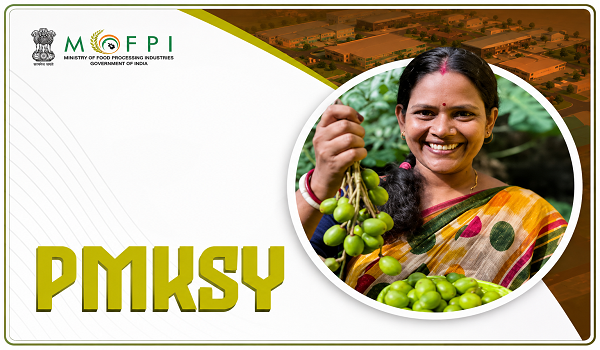
The Indian government is increasing its focus on the food processing sector through major schemes aimed at improving infrastructure, reducing post-harvest losses and helping farmers get better market access.
The Pradhan Mantri Kisan SAMPADA Yojana (PMKSY) is one of the key programmes supporting this effort. The scheme focuses on building modern infrastructure from the farm gate to the retail market.
India is one of the world’s largest producers of agricultural products. However, farmers continue to face problems such as post-harvest wastage, weak supply chains and price fluctuations. Food processing is seen as an important solution because it can add value to farm produce, improve farmer incomes and increase exports.
The food processing industry has also attracted strong investment. According to official data, the sector received around US$13 billion in foreign direct investment between April 2000 and December 2024. Nearly half of this investment came in the last decade.
The sector accounts for nearly one-third of India’s food market and continues to grow in production, employment and exports. Processed food exports during FY 2024-25 reached around US$7.89 billion. Important export categories included packaged food preparations, cereal products, processed vegetables, pulses, groundnuts and fruit-based products.
The SAMPADA programme was launched in 2017 and later renamed PMKSY. It was created to develop modern supply chains, food processing units, cold chains, agro-processing clusters and linkages between farmers and markets.
The scheme was initially given an allocation of around Rs 6,000 crore, with further support extended up to March 2026. As of February 2025, around 1,608 projects had been approved under different components of the scheme. More than Rs 6,198 crore had been disbursed.
The government is also supporting the sector through the Production Linked Incentive Scheme for Food Processing Industry. This scheme has an outlay of Rs 10,900 crore and aims to encourage large-scale food manufacturing. It covers areas such as processed fruits and vegetables, ready-to-eat foods, marine products, dairy products and new food segments.
By 2025, around 171 companies had been approved under the scheme. These companies brought in investments of about Rs 8,910 crore and created more than 2.89 lakh employment opportunities.
Another important scheme is the PM Formalisation of Micro Food Processing Enterprises programme. It aims to support nearly two lakh small food processing units by providing financial help, technology support and better market access under the One District One Product approach.
The government’s focus comes at a time when demand for packaged, convenience and ready-to-eat foods is increasing. Urbanisation, rising incomes and changing lifestyles are encouraging companies to expand their product range and invest in better processing technology.
Food supply chains are also changing. More investment is going into cold storage, refrigerated transport and integrated logistics to reduce wastage and maintain product quality. Companies are also using automation, artificial intelligence and IoT-based systems to improve efficiency, traceability and food safety.
Despite this progress, challenges remain. India still needs stronger cold chain infrastructure and better compliance with global quality standards. However, with continued government support, investment and technology adoption, India has the potential to become a major global food processing hub.