

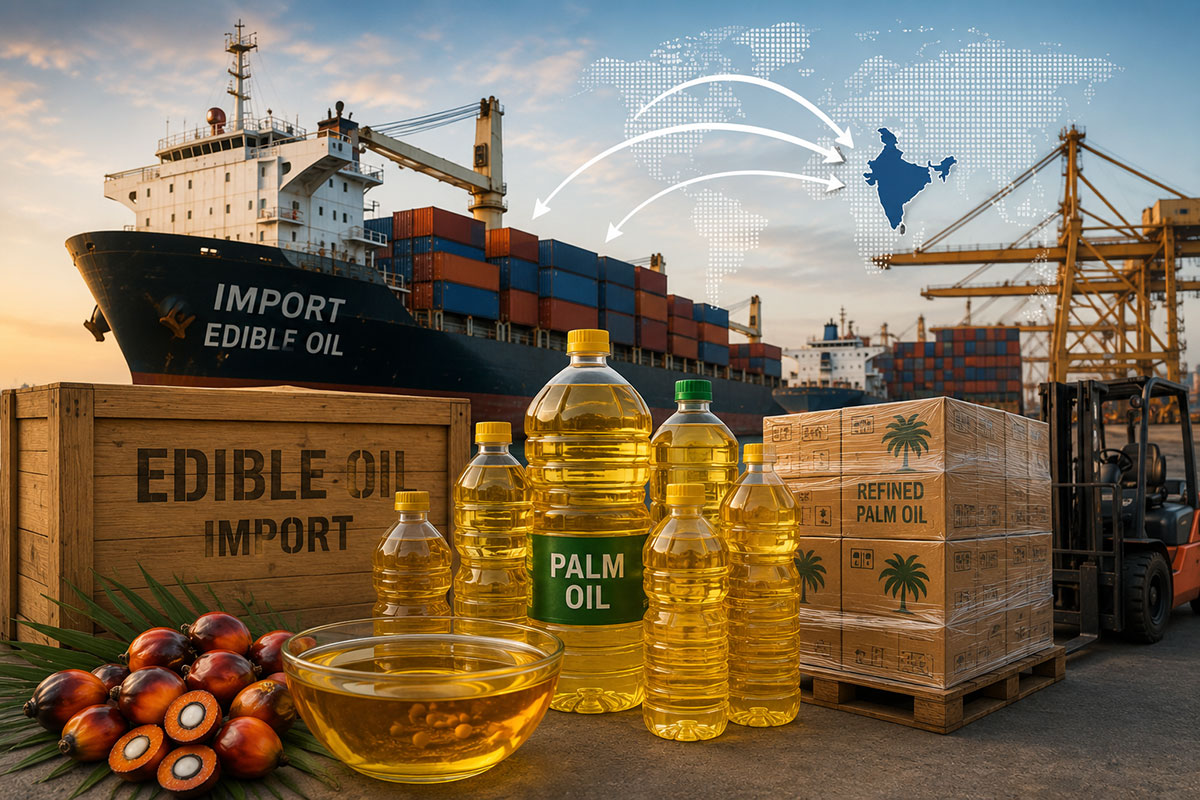
India’s vegetable oil imports fell sharply in June, dropping 29% year-on-year to 1.146 million tonnes, the lowest monthly level recorded so far in the 2025-26 oil year, according to the Solvent Extractors’ Association of India (SEA). The decline was largely attributed to weaker palm oil purchases after its long-standing price advantage over competing edible oils narrowed significantly.
India, the world’s largest importer of edible oils, had imported 1.616 million tonnes in June 2025. The current oil year runs from November to October.
The SEA said the slowdown reflects changing global price dynamics rather than a structural decline in demand. Although cumulative vegetable oil imports for the first eight months of the current oil year (November 2025–June 2026) rose to 10.57 million tonnes, compared with 9.955 million tonnes during the corresponding period last year, the steep decline in June has tempered the pace of overall import growth.
Palm oil imports, which account for the largest share of India’s edible oil purchases, fell as the commodity’s discount over rival oils shrank to below $50 per tonne, making soybean oil and sunflower oil comparatively more competitive. Crude palm oil imports declined to 488,863 tonnes in June from 546,456 tonnes in May.
Soybean oil imports also weakened, falling 23% month-on-month to 381,000 tonnes from 494,000 tonnes in May. In contrast, sunflower oil imports rose to 242,870 tonnes, up from 195,726 tonnes a month earlier, reflecting shifting buying preferences among importers.
Refined edible oil imports remained at zero for the second consecutive month, underscoring continued reliance on crude oils for domestic refining.
Lower import volumes also reduced domestic inventories. Total vegetable oil stocks stood at 2.009 million tonnes as of July 1, down from 2.216 million tonnes a year earlier.
The industry body also highlighted Nepal’s growing role in India’s edible oil trade under the South Asian Free Trade Area (SAFTA) agreement. Between November 2025 and April 2026, Nepal exported approximately 338,854 tonnes of refined edible oils to India, primarily refined soybean oil, along with sunflower oil, RBD palmolein and rapeseed oil. Shipments were estimated at around 54,000 tonnes in May and 32,000 tonnes in June.
India continues to source most of its palm oil from Indonesia and Malaysia, while soybean oil imports are largely supplied by Argentina and Brazil.
The June import data suggests that price competitiveness, rather than consumption trends, remains the dominant driver of India’s edible oil sourcing strategy. With global vegetable oil prices continuing to fluctuate, import patterns are expected to remain sensitive to shifts in relative pricing across major edible oil categories.