

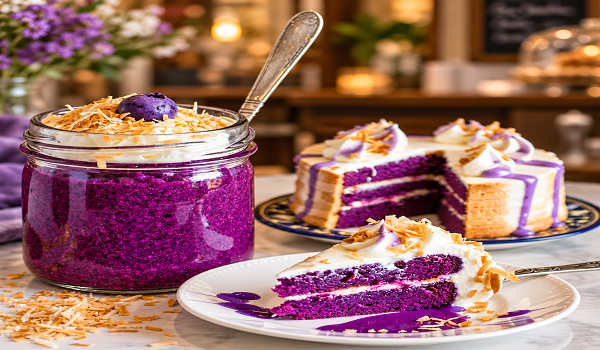
Ube, a purple yam native to the Philippines, is emerging as a new flavour trend in India’s cafe and dessert market, as younger consumers show growing interest in visually distinctive global ingredients.
Often compared with the rise of matcha, ube is finding its way into lattes, iced beverages, cheesecakes, gelato and other desserts. Its bright violet colour has become a major part of its appeal, while its mildly sweet and nutty flavour makes it relatively accessible to consumers unfamiliar with the ingredient.
Mumbai-based Japanese izakaya Supa San introduced ube to its menu, citing its global relevance, visual appeal, and a flavour profile suited to Indian consumers.
At Tokyo Matcha Bar & Cafe in Bandra, co-founder Meher Kohli said ube was a natural addition after matcha. According to the cafe, consumers are first attracted by the ingredient’s colour before exploring its flavour.
The trend is also moving beyond independent cafes. Starbucks India introduced ube-based beverages in August, including the Ube Coconut Latte and Ube Coconut Iced Shaken Espresso.
Adrit Mishra, COO, Tata Starbucks, said Indian consumers are becoming increasingly open to global flavours, with Gen Z particularly interested in discovering new tastes and experiences. The company is positioning ube as an additional flavour choice rather than a replacement for matcha.
Social media drives discovery
The visual appeal of ube is particularly relevant in a cafe market where social media increasingly influences food discovery. Data from GlobalData’s Q1 2026 survey of 21,000 consumers across 42 countries showed that more than 60% of Gen Z and millennials use social media to discover products with new flavours. More than half also said they enjoy sharing new flavours they like on social platforms.
Cafe operators say ube’s distinctive colour has helped its beverages and desserts attract attention online. At Supa San, ube-based desserts have generated increased visibility on Instagram, while Tokyo Matcha Bar & Cafe has also seen customers respond strongly to the visual presentation of ube products.
At Jacob’s Brew House in Jaipur, cofounder Sagar Nagpal said the ingredient could appeal beyond younger consumers when offered in familiar formats.
Search interest rises
Consumer curiosity around ube is also reflected in online search behaviour. Google Trends data showed searches for ube in India began accelerating in April and reached an all-time high in August.
Between June and August, Telangana, Karnataka, Gujarat, Chandigarh and Goa recorded the highest search interest. Searches for terms including ‘ube matcha’, ‘ube coconut’ and ‘ube dessert’ also increased, while searches for ‘what is ube’ recorded breakout growth in August.
Searches related to ube drinks, lattes and cafes also rose, indicating growing consumer interest in both the ingredient and ways to consume it.
The strongest demand is currently coming from Gen Z and millennials, although cafes report interest from other age groups as awareness increases.
Supply remains a challenge
Ube’s growing popularity in India comes as global demand puts pressure on supplies from the Philippines.
The Philippines produced about 5,660 tonnes of ube during the first half of 2026, a 17% increase from the same period last year. However, in mid-September, the country indefinitely suspended exports of fresh ube and propagative planting material to conserve plant resources and expand domestic production.
Processed and frozen ube can continue to be exported, but the restrictions could create sourcing and consistency challenges for Indian cafes and foodservice operators.
For the ingredient to develop beyond a social-media trend, cafe operators will need reliable supply, consistent flavour and commercially viable formats that encourage repeat consumption.
With ube now appearing across beverages and desserts and gaining visibility through major chains and independent cafes, the purple yam is increasingly moving from niche ingredient to a potential mainstream flavour in India’s growing cafe economy.