

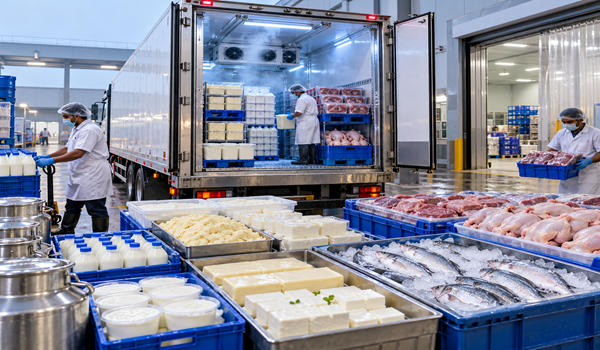
India’s food regulator has told food businesses to keep perishable items like khoa, paneer, meat and fish under controlled temperatures at every stage, from sourcing to the customer’s doorstep. State food safety officers have been asked to stay alert and act against violators.
The Food Safety and Standards Authority of India (FSSAI) announced the advisory in a social media post on Sunday. It covers the handling, storage and transportation of perishable foods under controlled temperature conditions across the supply chain.
Why the advisory was issued
The regulator said it had come to its notice that perishable foods such as khoa, paneer, meat and fish are at times not handled, stored or transported at the right temperature.
Because these items spoil easily, they are highly vulnerable to microbial growth if not kept at the proper temperature. “Subjecting these food products to temperature abuse may adversely affect food safety and public health,” the advisory said, adding that it also counts as non-compliance with hygiene and sanitary requirements.
FSSAI pointed out that these requirements are laid down in Schedule 4 of the Food Safety and Standards (Licensing and Registration of Food Businesses) Regulations, 2011. Under licence conditions, food business operators (FBOs) must maintain the prescribed temperature through the entire chain, from procurement to delivery to the end consumer.
What businesses have been told to do
The directive applies to all FBOs involved in manufacturing, packing, storage, transportation, distribution and sale of perishable foods. They have been asked to:
- Use only clean, covered and hygienic vehicles suitable for carrying food
- Maintain the prescribed temperature during storage and transportation
- Use food-grade packaging and suitable secondary packaging
- Protect products from dust, moisture, pests, physical damage and cross-contamination during storage, loading, unloading and transport
- Keep proper records and traceability of consignments, and be ready to produce invoices or other relevant documents
Tighter checks on the road and rail
FSSAI has also written to the commissioners of food safety in the states, Indian Railways and its own Regional Directors. It has asked them to direct licensing authorities and food safety officers to maintain strict vigilance during inspections and transportation checks.
Where businesses fail to comply, officials can take appropriate action, including seizing and destroying the food items. For traders, that could mean losing an entire consignment on the spot.
What it means for consumers
Khoa and paneer are in high demand during the festive season, when sweet shops and dairies move large quantities across cities. Meat and fish also travel long distances before reaching local markets. Without proper cold chains, such foods can turn unsafe even when they look and smell normal.
The advisory is aimed at closing that gap by making every link in the chain responsible, from the supplier and transporter to the retailer.
A pattern of tougher action
The advisory comes as FSSAI continues to step up enforcement. Over the past few days, the regulator has announced prosecution proceedings against companies for serious violations and proposed new limits on pesticide residues in tea, signalling a firmer push on food safety across the board.
FSSAI has not said when inspections under the advisory will begin or what penalties beyond seizure and destruction may apply. Businesses are expected to comply immediately.