

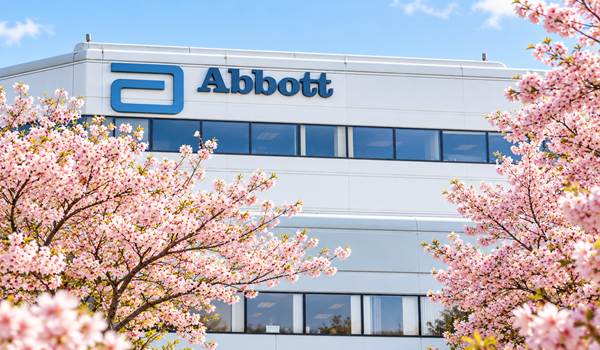
Abbott Laboratories will spin out its nutrition division into a separate, publicly traded company. The move would pull apart two very different businesses: one built on household names like Similac, Ensure and Pedialyte, the other on medical devices, diagnostics and established medicines.
The nutrition arm brings in about $8.5 billion a year. In the third quarter alone it generated $2.26 billion, up roughly 5% from a year earlier. Once it leaves, Abbott will be a leaner company with around $42 billion in annual sales.
Abbott expects to finish the separation by the end of 2027, pending regulatory approval and other closing conditions. Shareholders will then hold stock in both companies. The company said the split will not change its guidance for 2026 or 2027, which it plans to share in January.
CEO Robert Ford presented the decision as good for both sides. The nutrition business, he said, has a real chance to tap rising demand for healthy nutrition and will be better placed as an independent company to direct its resources where they matter most. Meanwhile, he said, Abbott’s core portfolio has “compelling growth opportunities” of its own.
Wall Street largely agrees. J.P. Morgan analyst Robbie Marcus said the case for separation is clear, expecting it to lift growth and margins while removing a business that has been difficult for Abbott and for the wider packaged-goods sector. BTIG analyst Marie Thibault noted that nutrition has at times dragged on overall sales growth, runs at margins below the company average, and carries lingering liabilities from infant formula litigation.
Those liabilities are hard to ignore. In 2022, Abbott recalled several brands of baby formula over potential contamination. The recall, together with the temporary shutdown of a major Michigan plant, helped trigger a nationwide formula shortage that left many parents scrambling.
The fallout has continued ever since. In September, Abbott announced a $385 million settlement with the Department of Justice, resolving claims tied to the recall along with suits from relators and several state attorneys general. The government closed its criminal investigation. Abbott said the settlement is not a finding of fault and maintained that no unopened, distributed Abbott infant formula has ever tested positive for Cronobacter sakazakii.
In August, the company also agreed to pay about $670 million to resolve claims from roughly 2,000 people over specialty formulas for premature infants, which were alleged to be linked to necrotizing enterocolitis, a serious intestinal condition that mainly affects preemies. Abbott said that agreement is not an admission of liability either.
Some lawsuits remain open. Ford told investors on Wednesday’s earnings call that resolving all of them is not a “prerequisite for completing the separation,” signaling that Abbott is ready to move forward even with loose ends.
Abbott joins a growing list of medtech giants reshaping themselves. Medtronic separated its diabetes business earlier this year, and Johnson & Johnson is planning to spin off its orthopedics unit.
The announcement came alongside third-quarter results. Abbott reported $13.01 billion in sales, up 14.5%. Still, it trimmed its 2026 sales growth forecast to 6%, down from a prior range of 6.5% to 7.5%.
For Abbott, the spinout is a bet that focus beats size. For the nutrition business, it is a chance to start fresh, though the shadow of the past few years will follow it into independence.