

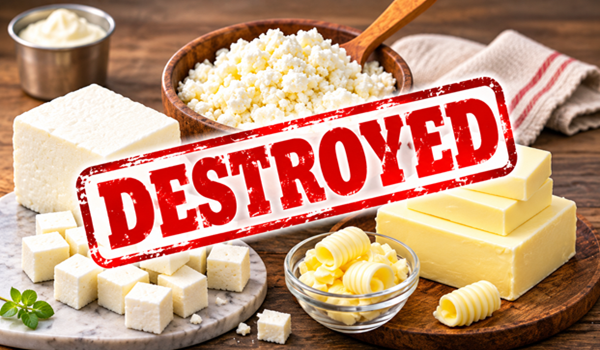
Food safety inspections uncover 85 non-compliant samples out of 290 tested; raids target sweet manufacturers, wholesale markets and online food businesses
Delhi’s festive food safety drive has resulted in the destruction of more than 4,000 kg of food products, including khoya, paneer and sweets, over the past two months, highlighting concerns over food quality and compliance during periods of peak consumption.
The Delhi Food Safety Department tested 290 food samples during the period, of which 85 were found to be unsafe or below prescribed standards, according to officials. The department conducted 30 enforcement actions, intensifying inspections during Navratri and the festive season when demand for dairy products, sweets and other food items typically rises.
The crackdown focused on products such as ghee, paneer, khoya and traditional sweets. Inspections covered vulnerable locations and wholesale markets, including Mori Gate Khoya Mandi, Okhla and Janakpuri, where officials carried out repeated checks and collected samples for laboratory testing.
In one significant operation, the department raided unlicensed sweet-manufacturing units in Nihal Vihar, identifying 12 premises and destroying around 400 kg of sweets. Fourteen samples were collected for testing as part of the action.
The enforcement drive extended beyond traditional sweet shops and manufacturing units. Restaurants, banquet halls, institutional clubs, retail outlets and food processing facilities were also inspected. Authorities widened their surveillance to e-commerce dark stores associated with platforms such as Swiggy, Zomato, Blinkit, Amazon and Reliance.
Food wholesalers using social media platforms, including YouTube and Instagram, to sell products were also brought under scrutiny, reflecting the department’s efforts to monitor emerging channels of food distribution.
Special inspections were conducted during Navratri to check products commonly consumed during fasting, including kuttu atta, samak rice, singhara atta and sabudana. Hospital kitchens were inspected to assess food hygiene and safety practices, while complaints received through CM Jansunwai and other public grievance channels were taken up for investigation.
The department also carried out a separate inspection drive covering seven bakery manufacturing and retail establishments, collecting 10 samples. Following assessments of hygiene and regulatory compliance, improvement notices were recommended for two establishments.
Health Minister Pankaj Kumar Singh said the department had been directed to maintain strict vigilance throughout the food supply chain, from manufacturing and wholesale distribution to retail outlets, restaurants and online delivery platforms.
He emphasised that food safety remained a public health priority and that enforcement activities would continue to prevent unsafe products from reaching consumers.
With the festive and wedding seasons generating higher demand for sweets and dairy-based products, the department plans to sustain inspections and sampling operations. Food business operators have also been urged to follow prescribed hygiene practices and comply with food safety regulations.
The scale of the latest crackdown underlines the importance of stronger monitoring of food manufacturing and distribution, particularly during periods when increased demand can create opportunities for substandard and unsafe products to enter the market.