

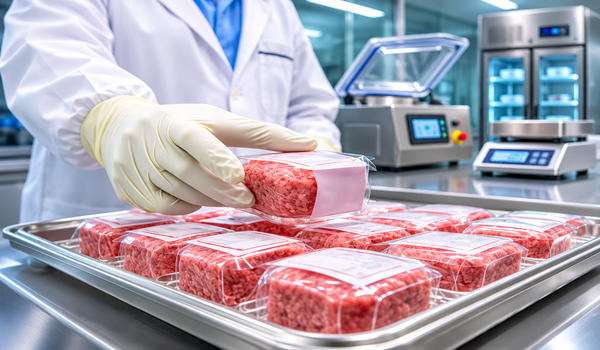
More than a decade after the world’s first lab-grown burger was unveiled to great fanfare, cultivated meat remains far from supermarket shelves, with the industry grappling with high costs, collapsing investment, state bans and lukewarm consumer interest.
The technology burst into public view on 5 August 2013, when Mark Post, a professor of vascular physiology at Maastricht University, presented a beef patty grown from cow cells at a livestreamed event in London. The burger took two years to make and cost €250,000, funded by Google co-founder Sergey Brin. Tasters found it lean and bland, but Post predicted that lab-grown meat would reach consumers within a decade, pitching it as a way to cut the land, water and emissions burden of livestock farming.
The launch triggered a rush of activity. Around 140 companies emerged across six continents, and about $3bn in investment flowed into the sector. Supporters claimed cultivated meat could tackle climate change, food insecurity, zoonotic disease and antibiotic resistance, while the thinktank RethinkX forecast that it would cut demand for conventional US beef by 70 per cent by 2030.
That promise has not materialised. Companies have struggled with the heavy cost of building plants, high energy needs, difficulty producing at scale and at affordable prices, a shortage of skilled workers and lengthy regulatory reviews. Investment peaked in 2021 and fell to just $177m globally in 2023.
Political opposition has added to the pressure. Florida, Alabama, Mississippi, Indiana, Montana, Nebraska and Texas have passed laws banning the sale, production or both of cultivated meat. Today, the product is sold at only one store in the world, Huber’s Butchery in Singapore, where GOOD Meat’s chicken product, containing just 3 per cent chicken cells, retails at $5.62 for a 110g serving.
The sector’s biggest setback came in December last year, when Israeli firm Believer Meats declared bankruptcy. The company had built a 200,000 sq ft facility in Wilson, North Carolina, billed as the world’s largest cultivated-meat plant with a capacity of 9.5m kilos of chicken a year, and had received a “no questions” letter from the US Food and Drug Administration in September 2025. It was sued for $34m by its contractor, Gray Construction, after defaulting on a $22m payment, and shut the plant before producing any meat.
Investors at an alternative protein forum in North Carolina described Believer as a warning against building factories before the technology is ready at scale. Rohan Shirwaiker, director of the Bezos Center for Sustainable Protein at North Carolina State University, set up with a $30m grant from Jeff Bezos’s Earth Fund in 2024, said the industry is now in what analysts call the “trough of disillusionment”.
Technical hurdles remain. Muscle and fat cells must still be grown separately, usually producing a semi-solid slurry that is blended with other ingredients and shaped into burgers, nuggets or meatballs.
Consumer appetite is also uncertain. A Good Food Institute report found that only 18 per cent of Americans find cultivated meat highly appealing, while nearly 60 per cent say they are unlikely to buy it.
Companies still in business are scaling back their ambitions. California-based Mission Barns, which won USDA approval for cultivated pork fat late last year, has shifted from retail to wholesale and plans products using plant protein and conventional pork fat until its own cultivated fat can be produced at scale. Its then CEO, Cecilia Chang, said the main challenge was cutting costs quickly enough to meet investors’ aggressive timelines. Meanwhile, Australia’s Vow is positioning cultivated meat as a novelty, developing products such as Japanese quail foie gras.