

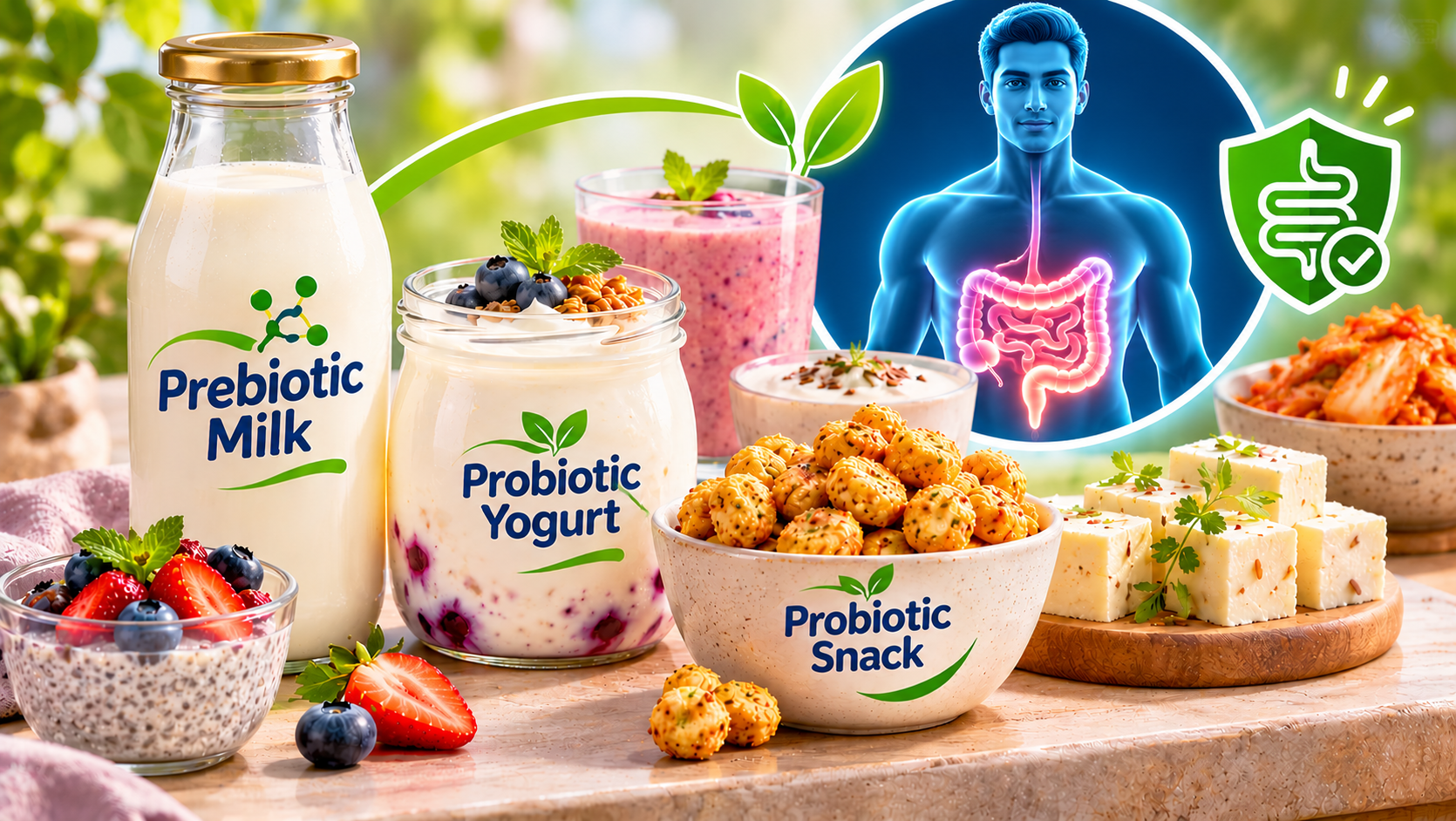
From prebiotic milk to probiotic snacks, brands are reformulating products as consumers put gut wellness near the top of their health priorities.
The ancient Greek physician Hippocrates is often credited with saying that all disease begins in the gut. Modern science increasingly backs up the idea, and food and beverage makers are racing to turn it into products.
A market set to double
According to Market Research Future, the gut health market, which spans foods, beverages and supplements, was worth an estimated $55.1 billion in 2025. The firm expects it to reach $115.2 billion by 2035, a compound annual growth rate of 7.65%.
Defining a fuzzy concept
To give the fast-growing category a scientific anchor, the International Scientific Association for Probiotics and Prebiotics (ISAPP) recently issued the first international consensus statement on what gut health means. It describes gut health as normal digestive function without active gastrointestinal disease or gut-related symptoms that affect quality of life.
The statement sets out six areas that make up gut health: the microbiome, the gut barrier, gastrointestinal physiology, the gut-brain axis, immune function and metabolism. It gives researchers, product developers and health professionals a common framework.
What consumers think
Shoppers see the topic more simply. An online survey of more than 1,000 adults, conducted by the International Food Information Council (IFIC) from May 20 to 25, 2026, found that nearly two-thirds rate gut health as a high or extremely high priority. Another 27% call it a moderate priority, and fewer than one in ten say it matters little or not at all.
Wendy Reinhardt Kapsak, IFIC’s president and CEO, said that for many people gut health “is more of a feeling and less a defined concept.”
Most respondents linked gut health to digestion and nutrient absorption. Far fewer connected it to immunity, mood, brain function or skin, though that may change as research advances and public understanding grows.
When it comes to action, people mostly change their habits rather than buy specific products. About three in ten said they had improved their diet, eaten more fibre or become more active in the past year. Nearly one in five said they were eating more probiotic foods such as yogurt and kefir.
Fibre leads the ingredient list
Research firm HealthFocus International found that consumers rank fibre as the ingredient most likely to aid digestion. Probiotics come next, followed by whole grains, ginger, prebiotics, turmeric, collagen, postbiotics and oat or barley beta glucan.
Adding the good, removing the bad
Manufacturers are working from both directions. Some add beneficial ingredients, while others remove compounds that trouble sensitive stomachs, such as lactose, certain fermentable carbohydrates and A1 beta-casein, a milk protein some people find hard to digest. Thom King, chief innovations officer at Icon Foods, noted that cutting sugar may help indirectly, because high added sugar can reduce microbiome diversity.
Launches across the aisles
- Dairy: Alec’s Ice Cream’s Culture Cup combines probiotics and prebiotics in A2 dairy. Darigold has added prebiotic fibre to its Nutrition+ Whole Milk, Dutch Farms markets lactose-free milk, and Danone’s Activia Expert pairs probiotics and prebiotics with 6 grams of protein.
- Breakfast: WK Kellogg Co’s Kashi Gut Health Granola uses chicory root fibre and a probiotic culture designed to survive until it reaches the gut.
- Beverages: NextFoods’ GoodBelly brand has launched dairy-free protein and probiotic smoothies. In early 2027 it will introduce a drink aimed at mental clarity through the gut-brain connection.
- Snacks: PIM Brands’ Welch’s Probiotic Yogofruits target children with probiotic cultures and 3 grams of fibre per serving.
As the science matures and consumers learn more, industry watchers expect gut health to move from niche claim to a standard feature on the shelf.