

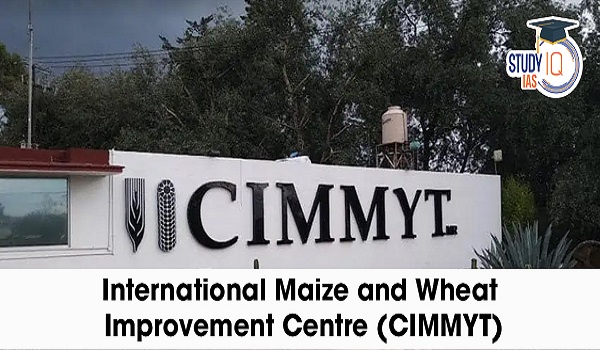
With US funding sharply declining, the International Maize and Wheat Improvement Center (CIMMYT) have called on India to step up its leadership role in safeguarding global food security.
In an interview with PTI during his India visit, CIMMYT Director General Bram Govaerts said the Mexico-based research body — pivotal in India’s Green Revolution — now faces a funding crunch that could cripple critical crop disease surveillance systems by year-end.
“We’ve been somewhat successful in securing funds, but urgently increased support is needed — not just for CIMMYT, but also for partners like ICAR (Indian Council of Agricultural Research),” Govaerts said.
He warned that without fresh resources, global capacity to respond to threats like wheat rust could collapse. CIMMYT’s genebank in Mexico played a crucial role in averting a crisis during the UG99 outbreak in 1999 by providing resistant wheat varieties to India.
Call for a New Funding Model
CIMMYT, part of the CGIAR consortium, has historically relied on US government support. In 2023, the organisation reported grant revenues of USD 135.1 million, with the US alone contributing USD 80.7 million. Of this, the Bill & Melinda Gates Foundation (USD 40.9 million) and USAID (USD 34.7 million) were the largest backers. Germany contributed USD 6.8 million, while India’s share stood at a modest USD 1.2 million.
“This is not about paying a Green Revolution debt,” Govaerts stressed. “This is about creating a future together. It is absolutely time for India to step up, not just for itself, but for the region and Africa.”
India as Beneficiary Turned Leader
With climate change intensifying floods and droughts, Govaerts urged India to transition from being a beneficiary of CIMMYT’s research to a regional leader, helping neighbours like Nepal and Bangladesh build resilience. He also emphasized private sector participation and collaborative financing models to sustain food research.
“Today, if we don’t find resources by the end of the year, those surveillance systems will go down and our response capacity will go down,” he cautioned, describing CIMMYT’s work as “business continuity insurance for society.”
Why It Matters
India’s rise from food scarcity in the 1960s to self-sufficiency and exports today was built on scientific collaborations with CIMMYT and Nobel laureate Norman Borlaug. As global climate shocks intensify, experts say India’s support could be decisive in shaping the future of resilient agriculture across Asia and Africa.