

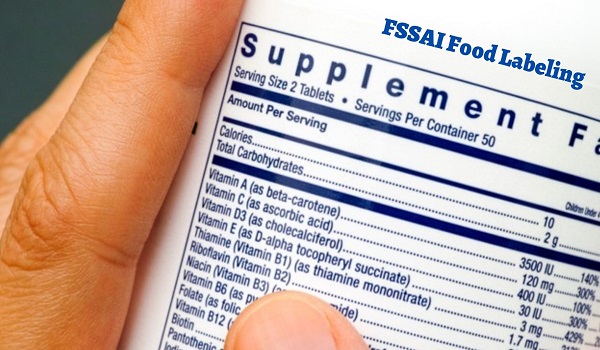
The recent directive by the Supreme Court of India asking the Food Safety and Standards Authority of India (FSSAI) to consider front-of-pack warning labels on pre-packaged foods is being seen as a significant moment in India’s food regulation landscape. Public health experts say the move strengthens consumer rights and improves transparency rather than targeting the food industry.
While reviewing FSSAI’s compliance affidavit on February 10, the court expressed dissatisfaction with the progress made so far, observing that the regulatory exercise had not produced meaningful results. It urged the authority to seriously consider introducing warning labels, signalling that prolonged consultations without clear outcomes may no longer be acceptable.
In recent years, regulatory discussions in India have largely focused on the proposed Indian Nutrition Rating (INR). This star-based front-of-pack labelling system combines positive and negative nutrients into a single score. However, several public health experts argue that such ratings could confuse consumers and may not clearly identify foods high in sugar, salt or saturated fat.
The rating system has not yet been implemented, with FSSAI citing the need for further consultations, research and stakeholder consensus. The court’s remarks indicate growing impatience with the delay and suggest a stronger push for a simpler and more direct way to communicate health risks to consumers.
The issue has gained urgency as packaged and ultra-processed foods become increasingly accessible across income groups in India. This trend has coincided with a rise in obesity, diabetes, hypertension and cardiovascular diseases. Experts note that front-of-pack labelling sits at the intersection of consumer rights, public health and market regulation. Unlike detailed nutrition tables printed on the back of packages, warning labels provide immediate alerts that help consumers quickly identify products that may pose health risks.
Several countries have already adopted interpretive warning systems that highlight high levels of sugar, salt or fat on the front of food packages. Studies from these markets suggest such labels influence consumer choices and also encourage manufacturers to reformulate products to avoid warnings.
Industry observers say clear labelling rules can provide regulatory certainty and reward companies that invest in healthier formulations and transparent communication, rather than relying solely on marketing claims.
Legal experts also point out that the Supreme Court’s observations frame the issue within the constitutional right to health, raising the stakes for regulators. When health risks are known, the state has a responsibility to ensure that consumers receive clear information at the point of purchase.
The four-week window given to FSSAI to respond is being viewed as a critical moment, with expectations that the regulator will move from consultation to concrete decision-making.
The outcome could shape the future direction of India’s food labelling policy. If mandatory warning labels are implemented, India would join a small group of major economies that have taken strong regulatory steps in the interest of public health while increasing transparency in the packaged food market.
With India emerging as one of the world’s fastest-growing consumer markets, the decision could have far-reaching implications for both domestic manufacturers and global food companies operating in the country.