

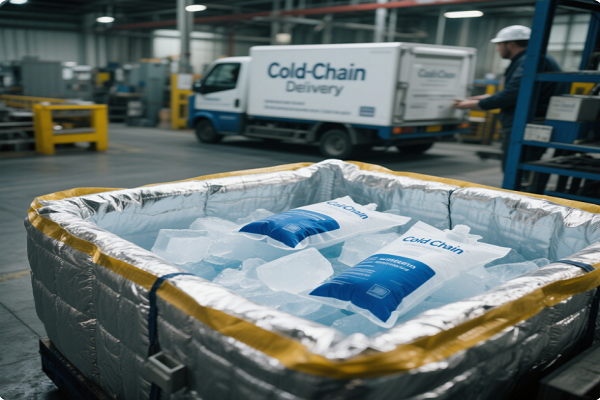
As the festive season intensifies consumer demand for premium perishable gifts — from curated seafood hampers to artisanal cheeses and gourmet desserts — Indian e-commerce and logistics providers are spotlighting cold chain packaging as a critical safeguard not just for food quality but for customer trust and brand reputation.
With online gifting booming, the stakes for perishable shipments are rising. Unlike traditional bulk cold chain logistics engineered for controlled facilities, direct-to-consumer deliveries navigate complex last-mile networks through multiple climates and handling conditions. Without robust temperature-controlled packaging, heat exposure or cold loss can spoil contents long before delivery — undermining customer experience and potentially impacting safety.
Cold chain packaging thus becomes more than food preservation; it is central to guaranteeing a premium unboxing experience.
Perishable Packaging Challenges in India
In India, cold chain logistics and packaging face several structural challenges:
Last-mile variability: Especially during the peak holiday season, delivery fleets confront unpredictable traffic, high ambient temperatures and inconsistent handling across urban and rural routes.
Infrastructure gaps: Cold storage facilities are expanding but unevenly distributed, particularly outside major metros, making insulated packaging essential to bridge temperature gaps between hubs and doorsteps.
Regulatory compliance: Packaging must meet food contact and safety standards enforced by authorities such as the Food Safety and Standards Authority of India (FSSAI), which governs acceptable materials and labelling for food packaging.
Indian cold chain thought leadership also includes the National Centre for Cold-chain Development (NCCD) — a government-supported body that guides sector growth and standards, reinforcing the need for best practices across storage, transport and packaging segments.
Innovations and Best Practices for Perishable Gift Packaging
Industry players in India are adopting and innovating across multiple fronts to ensure perishables arrive in prime condition:
Phase Change Materials (PCMs) & gel packs: Companies such as Tessol provide PCM-based thermal packs and insulated carriers designed to maintain precise temperature ranges for chocolates, seafood and dairy products during extended transit, from short bike deliveries to multi-day cross-city journeys.
Insulated boxes and bags: Advanced reusable and collapsible insulated containers are increasingly used in the D2C gifting segment to balance thermal performance with sustainability goals.
Sustainable materials: Across global and domestic markets, e-commerce packaging suppliers — including eco-friendly options that use fibre-based liners and compostable coolants — are gaining traction, aligning temperature control needs with growing environmental expectations.
Testing and validation: Brands are investing in validated packaging solutions tested across temperature profiles to ensure performance across India’s diverse climatic conditions, reducing the risk of spoilage and customer dissatisfaction.
Packaging: The First Line of Defence — And Brand Promise
For brands shipping perishable gifts, packaging is now also marketing. A recipient who opens a chilled gourmet box that looks and feels premium is more likely to associate that quality with the brand — increasing chances of repeat purchases and positive social media sharing.
Industry experts emphasize that optimal cold chain packaging goes hand-in-hand with sustainability, regulatory adherence and digital tracking to create a seamless experience from warehouse to doorstep.