

India’s centuries-old spice industry is undergoing a structural transformation as technology-led systems replace intuition-driven processing, bringing greater consistency, traceability, and quality assurance to one of the country’s most traditional food sectors.
Long dependent on manual expertise and inherited practices, spice manufacturing is now embracing scientific precision and digital governance. Manufacturers are increasingly treating spices as complex food products that require controlled processing, measurable quality standards, and repeatable outcomes across batches and markets.
At the centre of this shift is the adoption of integrated digital infrastructure. Enterprise resource planning (ERP) platforms are connecting procurement, production, warehousing, quality control, and finance into unified operational systems, enabling real-time monitoring of inventory, production status, compliance checkpoints, and order fulfilment. Analytical dashboards are further helping companies move from retrospective reviews to continuous performance tracking, supporting scale and operational efficiency.
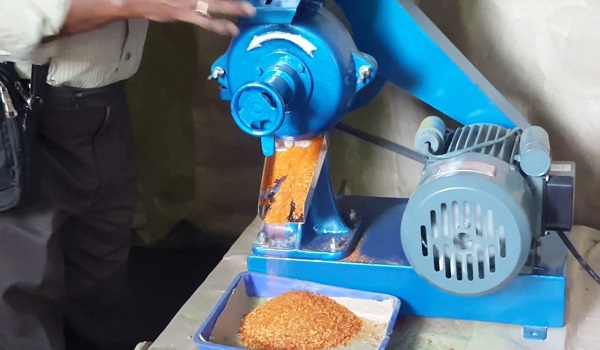
Processing technologies are also evolving. Conventional high-heat grinding methods—known to reduce essential oils and weaken aroma—are gradually being replaced by temperature-controlled cold-grinding systems. These modern units digitally track grind size, rotational speed, and thermal conditions for each batch, ensuring uniform texture, colour, and flavour while preserving freshness. Production runs are documented and evaluated against reference sensory benchmarks, reducing dependence on subjective judgement.
Modern spice facilities are increasingly designed as traceable, sensor-enabled environments. Standardised cleaning, grading, and air classification processes precede enclosed grinding operations equipped with automated alerts for parameter deviations. Inline quality checks, such as metal detection, moisture monitoring, and sieve validation, are digitally recorded, while automated weighing and verification systems in packaging lines improved accuracy and minimise rework. This end-to-end logging enables full traceability from raw material sourcing to final dispatch.
The rise of e-commerce and quick commerce has added further complexity to demand planning, pushing manufacturers towards granular, data-driven forecasting. Production cycles are now tailored to specific sales channels—smaller, frequent batches for fast-moving online platforms and advanced inventory planning for traditional retail peaks—helping reduce stock-outs, wastage, and working-capital pressures.
Quality assurance, once reliant on manual inspection, is becoming system-governed. Digitized testing protocols, predefined sourcing specifications, and automated deviation alerts are strengthening compliance and accountability across the value chain. At the same time, automation in packaging, moisture control, and production planning is improving throughput while reducing spoilage and ageing inventory.
Consumer data is also playing a growing role in shaping product innovation. Insights drawn from reviews, returns, and service interactions are informing rapid product trials, enabling companies to develop convenient, time-saving spice formats aligned with modern cooking habits while maintaining standardised quality.
Industry observers note that continued advances in predictive analytics, automation, and integrated data systems are likely to define the sector’s next phase. As transparency and precision become central to operations, India’s once fragmented spice ecosystem is steadily evolving into a technology-driven industry—where freshness, safety, and trust are engineered through systems rather than tradition alone.