

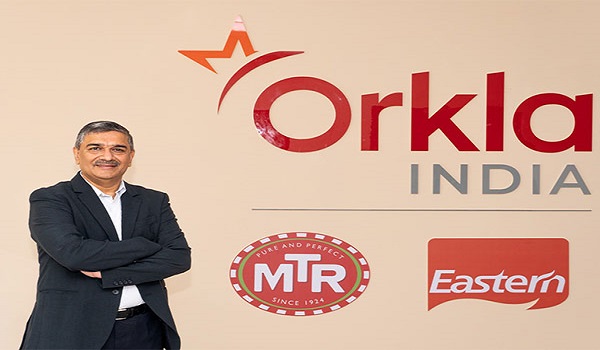
In one of the most remarkable cross-cultural business success stories, Norwegian conglomerate Orkla ASA has transformed its ₹353-crore acquisition of Bengaluru-based MTR Foods in 2007 into a ₹10,000-crore enterprise — now known as Orkla India Ltd.
The company, which began as a copper mining firm in 1654 in Norway’s Trøndelag region, made its foray into India 18 years ago by acquiring MTR Foods — then a regional brand with annual revenues of just ₹135 crore, rooted in South Indian culinary traditions.
Orkla’s approach was distinct: it chose not to flood the market with aggressive expansion or foreign executives. Instead, it preserved MTR’s authentic “Kannadiga” identity while modernizing its operations and product portfolio.
“Rather than being a small fish in a big pond, we chose to be a big fish in a small pond,” said Sanjay Sharma, CEO of Orkla India. “Our focus on regional strength and deep cultural connection defined our success.”
Under Orkla’s ownership, MTR evolved from a heritage restaurant on Bengaluru’s Lalbagh Fort Road — famous for its idlis and filter coffee — into a diversified food powerhouse. The brand’s ready-to-cook mixes, spices, pickles, papads, and instant meal products are now sold in 32 countries, including the US, UK, Australia, and New Zealand.
Over time, Orkla India strengthened its presence by acquiring Rasoi Magic in 2013 and a 67.82% stake in Eastern Condiments in 2021 for ₹2,000 crore — a move that nearly doubled its manufacturing footprint and workforce.
As of June 2025, Orkla India operates nine owned factories and 18 contract units in India, with additional facilities in the UAE, Thailand, and Malaysia. Its network spans 834 distributors and 20 warehouses, delivering an average of 2.3 million units daily.
The company commands significant regional dominance — a 31.2% share in Karnataka’s packaged spice market, 41.8% in Kerala, and 15.2% across Andhra Pradesh and Telangana. Its products now reach nine out of ten households in both Karnataka and Kerala.
Financially, Orkla India continues to outperform many of its FMCG peers. Its FY25 revenue stood at ₹2,445 crore with a profit of ₹255.69 crore, reflecting a 10.7% profit margin — higher than Tata Consumer Products’ 7.3%.
In October 2025, Orkla India made its stock market debut, launching a ₹1,667.54-crore IPO through a complete offer-for-sale. The issue was priced between ₹695 and ₹730 per share and was oversubscribed across categories. The company’s shares listed on November 6 at ₹751.50 on the BSE — a 3% premium to the issue price — giving it a valuation of around ₹10,000 crore.
Anchor investors included Nippon India, LIC, Aditya Birla Sun Life, Nomura, and Norway’s Government Pension Fund Global.
CEO Sanjay Sharma called the listing “a commitment to India, not an exit.”
With India’s packaged food sector projected to grow at an 11% CAGR through FY29, Orkla India stands as a rare example of a foreign company that deeply localized its operations — turning idlis, masalas, and nostalgia into an enduring global business story.