

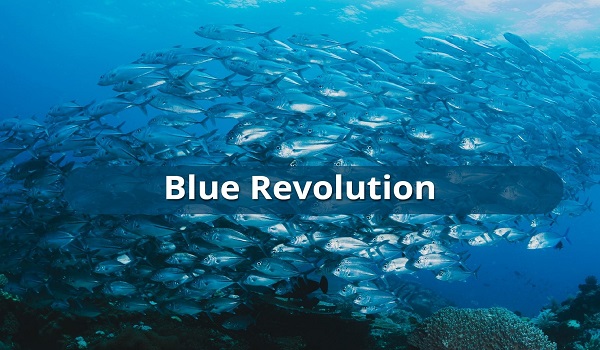
The Government of India is accelerating efforts to transform the fisheries sector under the Pradhan Mantri Matsya Sampada Yojana (PMMSY), a flagship scheme launched in 2020-21 with an outlay of ₹20,050 crore. The programme, running through 2025-26, is designed to drive a “Blue Revolution” by modernizing infrastructure, boosting fish production, and improving the livelihoods of fishermen across the country.
Expanding Infrastructure
Over the past five years, PMMSY has sanctioned 734 cold storages and ice plants and more than 27,000 transportation units, including motorcycles, bicycles, auto rickshaws, insulated and refrigerated trucks, and live fish vending vehicles. Additionally, 6,410 fish kiosks, 202 retail markets, and 21 wholesale markets have been approved, with a total investment of ₹2,375.25 crore.
Parallelly, the Fisheries and Aquaculture Infrastructure Development Fund (FIDF) continues to provide concessional finance to states and union territories for aquaculture and fisheries-related facilities. Since 2014, 117 fishing harbors and landing centres have been sanctioned at a cost of ₹9,832 crore under various central schemes, including PMMSY, Blue Revolution, and FIDF.
Tackling Climate Challenges
While the Department of Fisheries has not received direct reports on the impact of climate change on fish migration or breeding, research under the Indian Council of Agricultural Research (ICAR) points to rising temperatures, erratic monsoons, and shifting breeding cycles as emerging risks. Studies under the National Innovation in Climate Resilient Agriculture (NICRA) project confirm that climate change is already affecting fish habitats and physiology.
To counter these threats, PMMSY has introduced measures such as artificial reef development, sea and river ranching programmes, and promotion of eco-friendly aquaculture practices. The scheme also focuses on climate adaptation by strengthening coastal ecosystems and improving resource efficiency.
Climate-Resilient Villages
A major initiative under PMMSY is the transformation of 100 Coastal Fishermen Villages (CFVs) into Climate Resilient Coastal Fishermen Villages (CRCFVs). Identified jointly with state governments, these villages are being developed to become hubs of sustainable fishing and economically vibrant coastal communities.
Securing the Future of Fisheries
By modernizing post-harvest infrastructure, promoting sustainable practices, and strengthening climate resilience, India’s fisheries sector is being positioned as a critical driver of both rural livelihoods and national food security. The Ministry of Fisheries, Animal Husbandry and Dairying said the initiatives are expected to protect biodiversity, enhance productivity, and safeguard fisher livelihoods against the long-term threats of climate change.