

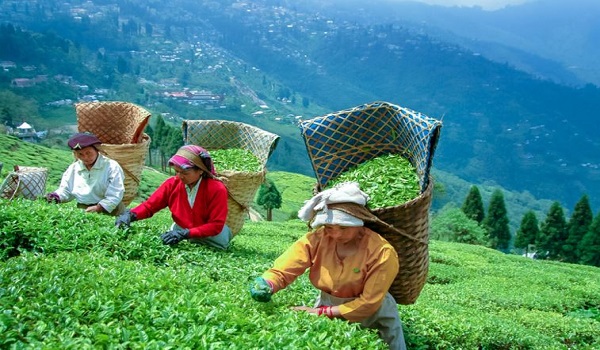
The Indian Tea Association (ITA) has called for urgent government intervention to stabilize tea prices and address the severe financial crisis gripping India’s tea sector. The apex trade body has proposed measures, including production control, export support, regulated imports with a minimum import price, and expedited approvals for pesticides and clarity on maximum residue limits (MRL) in tea.
Speaking at the 142nd Annual General Meeting, ITA Chairman Hemant Bangur said that the industry’s financial health has reached a breaking point, with over 80% of organized tea estates reporting cash losses last year and further price declines in 2025 pushing margins into the negative.
“This situation threatens the long-term viability, investment capacity, and workforce stability of the tea sector,” Bangur cautioned, urging the government to extend a relief package for the Darjeeling tea industry and introduce transport subsidies for landlocked regions.
The global tea market has been hit by a production surge of 352 million kg, leading to a surplus of 418 million kg in 2024. Although India’s production dipped in 2023, it rebounded in 2025, creating domestic oversupply and unsustainable price realizations.
Bangur emphasized the need for optimized production and a sustainable pricing regime to restore market balance. With small tea growers contributing 54% of India’s total output, he advocated for a fair green leaf pricing model and a level playing field for organized producers who face higher statutory costs.
Auction prices in North India have fallen sharply by ₹16.87 per kg (Jan–Aug 2025), dealing another blow to profitability. Despite the domestic downturn, exports grew 10% last year to 256 million kg, making India the third-largest tea exporter globally. However, Bangur warned that the new U.S. tariff regime could erode India’s competitiveness in key markets.
He urged the Center to revisit RoDTEP incentives, raising them to 5–6%, to sustain orthodox tea exports to major destinations including Russia, Iran, and the UK, as well as new markets in West Africa and the Middle East.
The ITA also raised alarms over low-duty imports from Kenya and Nepal, which have doubled in volume, driving down domestic prices and compromising quality. Bangur called for stricter safeguards and action against blended re-exports falsely marketed as Indian teas — a malpractice he said was damaging Darjeeling’s global reputation.
Addressing environmental concerns, Bangur announced the ITA’s partnership with Solidaridad Asia to promote regenerative tea farming in line with Regen-Agri standards. He also lauded renewable energy initiatives in Assam and West Bengal, which are enabling tea producers to transition to solar and clean energy through net-metering systems.
“The Indian tea industry needs a comprehensive policy reset — one that supports fair prices, sustainable production, and long-term competitiveness,” Bangur concluded.