

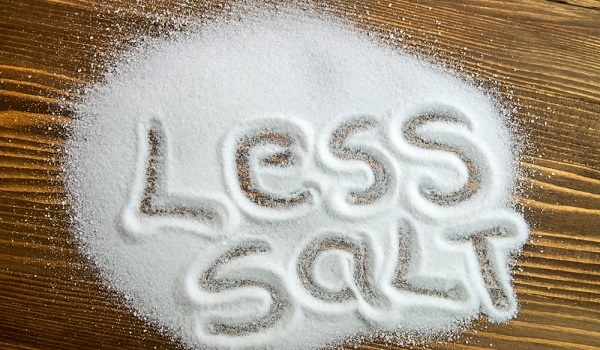
Global sodium reduction efforts have evolved from regulatory compliance to a core consumer demand, spurred by heightened awareness of health risks like heart disease. As the WHO pushes for a 30% cut in intake by 2025, food companies are turning to innovative, natural ingredients to slash salt without sacrificing taste, texture, or shelf life.
The challenge is steep: salt is critical for flavor enhancement, microbial control, and preservation in categories like processed meats, snacks, sauces, and bakery items. Yet, brands are meeting it head-on with multifunctional solutions from suppliers like Lionel Hitchen, Levapan, and Corbion.
“Salt reduction is now a business priority, not just a compliance checkbox,” said Fran Padgham, Marketing Manager at Lionel Hitchen. “Consumers want healthier options that still deliver full flavor — and clean labels are non-negotiable.”
Lionel Hitchen’s Miso Flavour uses umami-rich, natural fermentation to boost perceived saltiness and mouthfeel. Internal trials showed crisp seasonings with 20% less sodium scoring higher in flavor richness and satisfaction than traditional reductions using potassium chloride (KCl), which often introduces bitterness.
“Customers describe reduced-sodium prototypes with Miso Flavour as ‘complete’ and ‘balanced’,” said Becca Godber, Applications Manager. “It’s flavor-led reformulation — not substitution.”
Meanwhile, Levapan’s Biolev line leverages yeast extracts high in nucleotides and amino acids to naturally amplify savory notes. In one case, a snack maker achieved 30% sodium reduction without MSG or I+G, using FlavorMax Low Sodium Yeast Extract, while maintaining consumer acceptance in blind tests.
Another success: an organic soup brand in Europe used Organic Rich Umami 6VLS to meet clean label and non-GMO standards while deepening umami and aroma.
Corbion takes a dual-pronged approach with PuraQ Arome NA4 and Purasal HiPure P Plus, enabling up to 40% sodium reduction in meat products while preserving microbial stability and eliminating KCl’s metallic aftertaste.
“Reducing sodium impacts safety and texture — not just taste,” said Stephan Dobbelstein, Business Development Director at Corbion. “Our solutions maintain functionality across the product lifecycle.”
With the EU’s Farm to Fork Strategy and UK HFSS rules tightening promotion of high-salt items, clean label, umami-driven reformulation is fast becoming the industry standard. As Daniel Ramírez, Marketing Manager at Levapan, noted: “Shoppers expect rich taste from natural sources — and yeast delivers that without compromise.”
The shift signals a new era: sodium reduction is no longer a trade-off — it’s a competitive edge.