

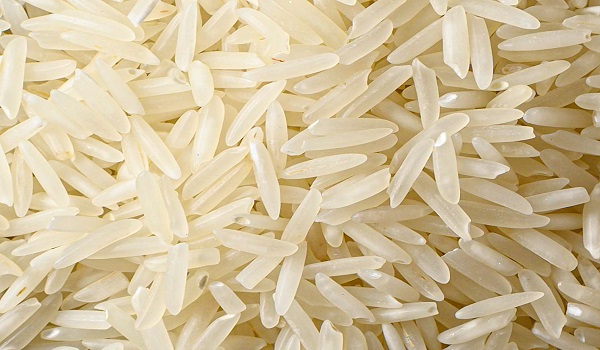
India’s basmati rice exports have been hit by fresh disruption as payments worth about ₹2,000 crore are stuck following civil unrest in Iran, one of the country’s largest overseas buyers of the premium grain.
Iran imported around 598,000 tonnes of Indian basmati rice between April and November, according to the Indian Rice Exporters Federation (IREF). However, ongoing protests in Tehran have led to the closure of retail outlets and a breakdown in banking and communication systems, preventing Iranian importers from remitting payments or honouring existing contracts.
“Importers in Iran have reported their inability to remit payments and honour their contracts. There is no communication with Iranian buyers, and basmati rice from India is lying at Iranian ports,” said Ved Garg, vice-president of IREF.
The disruption has triggered uncertainty across India’s basmati trade, with wholesale prices of key varieties falling by about 7% over the past week. Exporters are also concerned about renewed geopolitical risks, including US President Donald Trump’s warning of a 25% additional tariff on countries continuing trade with Iran.
In response, IREF has issued an advisory urging exporters to reassess their exposure to Iran-linked contracts, adopt more secure payment mechanisms and avoid building up inventories meant solely for the Iranian market.
“We are not sounding an alarm, but urging prudence. In periods of geopolitical and internal instability, trade is often the first casualty,” said Prem Garg, IREF’s national president. He added that exporters have been encouraged to diversify into alternative markets across West Asia, Africa and Europe to reduce their dependence on Iran.
Large exporters have already begun limiting their exposure. Akshay Gupta, head of bulk exports at KRBL, the maker of India Gate basmati rice, said the company once shipped around 250,000 tonnes to Iran annually but has significantly reduced its direct dealings due to sanctions and trade restrictions.
“Today, our exposure to Iran is limited to about $8–10 million. Most of our trade is now routed through the UAE, where Iranian importers operate locally,” Gupta said.
Industry estimates place the current price of basmati rice at around $900 per tonne. While uncertainty persists over potential US tariffs on Iran-linked trade, exports to the US have so far remained resilient, with shipments rising year-on-year between September and November.
With Iran-bound shipments stalled, Indian exporters are now racing to secure alternative markets to cushion the impact of prolonged instability in one of their most important destinations.