

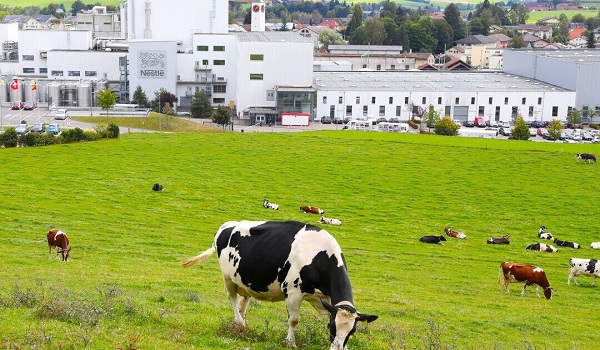
Food and beverage giant Nestlé has withdrawn from the Dairy Methane Action Alliance (DMAA) — a global coalition aimed at reducing methane emissions from dairy farming — even as it reaffirmed its commitment to achieving net-zero greenhouse gas emissions by 2050.
The DMAA, launched in December 2023 by the Environmental Defense Fund (EDF), includes major companies such as Danone, Kraft Heinz, and Starbucks. Member firms are expected to publicly disclose methane emissions from their dairy supply chains and outline concrete plans to cut those emissions over time.
While Nestlé did not specify the reason behind its decision to leave the alliance, the Swiss multinational stated that it “regularly reviews its memberships of external organizations” and has “decided to discontinue its membership of the Dairy Methane Action Alliance.”
Despite the exit, Nestlé emphasized that it would continue working to curb greenhouse gas emissions, including methane, across its supply chains. The company reported a 21% reduction in methane emissions by the end of 2024, compared to 2018 levels, as per its latest non-financial report.
Methane, a greenhouse gas nearly 30 times more potent than carbon dioxide, remains a key focus of global climate action efforts. According to EDF, agriculture accounts for around 40% of human-caused methane emissions, with livestock being the major contributor.
Following Nestlé’s withdrawal, its logo was removed from the EDF’s main website page for the alliance, although references to the company still appear elsewhere. The EDF confirmed Nestlé’s departure, noting that it had “reviewed its external partnerships”, while acknowledging the company’s continuing efforts.
“We appreciate Nestlé’s ongoing commitment to acting on dairy emissions through its Dairy Climate Plan and Net Zero Roadmap,” said Katie Anderson, Senior Director for Business, Food & Forests at the EDF.
In a related move, Nestlé announced a partnership with the World Farmers’ Organization to support initiatives aimed at making food systems more resilient to climate change.
Nestlé’s decision comes amid growing uncertainty around global climate alliances, as several corporations and financial institutions reassess their participation in such initiatives.