

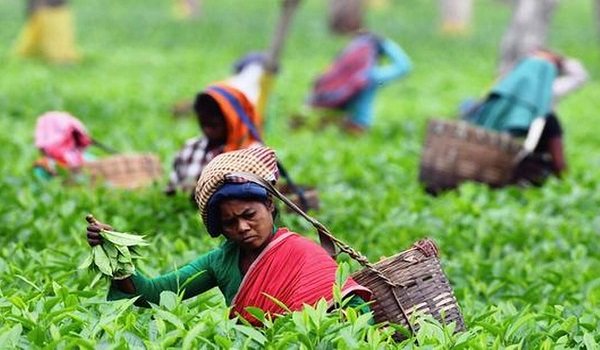
India’s tea industry is grappling with mounting financial pressure as escalating input costs, stagnant prices, labour shortages and climate-related disruptions strain estate profitability, prompting planters to call for urgent policy intervention and structural reforms.
Industry representatives said several estates are being forced to sell tea below production cost, leading to increased borrowing and financial stress. Uttam Chakraborty, Chairman of the North Bengal branch of the Tea Association of India, noted that wages alone account for nearly 60% of production expenses, leaving the sector highly vulnerable to wage revisions and rising input prices. Costs of fertilisers, coal, pesticides and electricity have surged in recent years, with power expenses estimated at ₹10–11 per kg of made tea.
Highlighting a persistent mismatch between rising costs and price realisation, Shailja Mehta, President of the association, stressed the need for a minimum sustainable price mechanism to ensure remunerative returns for producers. She also underscored the sector’s regional importance, noting that the tea ecosystem in northern West Bengal supports nearly 32 lakh people—around 28% of the local population.
Labour availability has emerged as another major concern, with some estates reporting absenteeism of 25–50% during peak production, forcing reliance on costlier external workers. At the same time, erratic rainfall, rising temperatures and pest infestations linked to climate variability are affecting both yield and quality.
Planters have urged faster disbursal of pending subsidies from the Tea Board India, interest subvention on working capital loans, and financial incentives for speciality tea production and machinery upgrades. They have also sought access to schemes under the Ministry of Agriculture and Farmers Welfare, arguing that tea cultivation is fundamentally agricultural.
Additional demands include lower electricity tariffs and quicker rollout of solar power provisions notified by the West Bengal Electricity Regulatory Commission to ease energy costs. Stakeholders further warned that cheap imports and mislabelling of blended teas as Indian origin are undermining domestic producers and export credibility.
India remains the world’s second-largest tea producer, with the sector directly employing more than one million workers, making its financial sustainability a critical economic concern.