

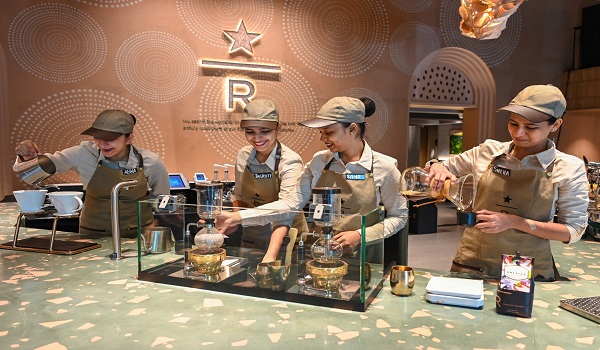
Starbucks is strengthening its long-term commitment to India even as the café market becomes increasingly crowded and profitability remains a challenge. The world’s largest coffee chain, operating in partnership with Tata Consumer, has opened around 500 stores since entering India 12 years ago—a far slower pace compared with its rapid scale-up in China, where it reached 8,000 outlets in 25 years.
Despite this measured expansion, Starbucks’ global CEO Brian Niccol described India as one of the company’s fastest-growing markets worldwide. “We are committed to grow strategically and sustainably in this market for the long term,” he told ET. “We believe there is enough room for both independent stores and chains to grow and thrive along with us”. Niccol added that Starbucks is currently in an investment phase in India and continues to see positive same-store sales growth.
In FY25, Starbucks India reported a 5% rise in revenue to ₹1,277 crore, but losses widened nearly 66% to ₹135.7 crore. Industry analysts attribute the pressure to high real-estate costs and India’s café culture, where customers typically spend long hours inside stores, unlike the takeaway-driven model prevalent globally.
The competitive landscape has also intensified, with Tim Hortons, Pret A Manger, Third Wave Coffee, and Blue Tokai rapidly expanding their footprints. Niccol said India remains a “unique market,” requiring localized strategies rather than a one-size-fits-all approach.
Globally, Starbucks has rolled out tighter operational controls, including the Green Apron Service model to improve speed and staff engagement. In India, the company has adapted with smaller portion sizes such as the 6-ounce Picco cup and a range of Indian-inspired beverages aimed at value-conscious consumers.
Starbucks is also deepening its collaboration with Tata through a new Farmer Support Partnership. The initiative aims to train 10,000 farmers by 2030, distribute one million high-yield arabica seedlings, develop model farms, and offer digital agronomy tools.
Niccol praised Tata’s role in shaping the brand’s India strategy: “Their passion, dedication, and strong customer connection are the model for the rest of the world.”