

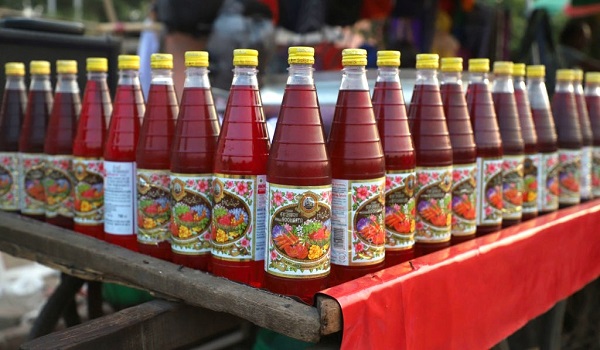
In a significant tax ruling, the Supreme Court of India has held that Rooh Afza, manufactured by Hamdard Laboratories, qualifies as a fruit drink under the Uttar Pradesh Value Added Tax (VAT) Act, making it eligible for a lower tax rate of 4%.
The verdict came as a relief to Hamdard (Wakf) Laboratories after the Uttar Pradesh commercial tax department sought to classify the popular beverage under the residuary entry category, which attracts a higher VAT rate of 12.5%.
A bench led by Justice B.V. Nagarathna rejected the tax department’s contention, observing that the drink derives its essential character from fruit-based constituents. The Court clarified that regulatory or licensing classifications cannot determine or restrict the interpretation of entries under fiscal statutes.
The bench further noted that Entry 103 of Schedule II, Part A of the 2008 Act — which pertains to fruit juices and processed fruit products — is illustrative and inclusive in nature. It does not mandate any minimum quantitative threshold of fruit content for a product to qualify under the category.
By affirming that ‘Sharbat Rooh Afza’ falls within the fruit drink classification, the apex court effectively capped the applicable VAT at 4%, overturning the state tax department’s attempt to impose a higher levy.
The ruling is expected to have wider implications for the classification of similar beverages under state tax laws, reinforcing the principle that a product’s essential composition — rather than administrative categorization — should guide fiscal treatment.