

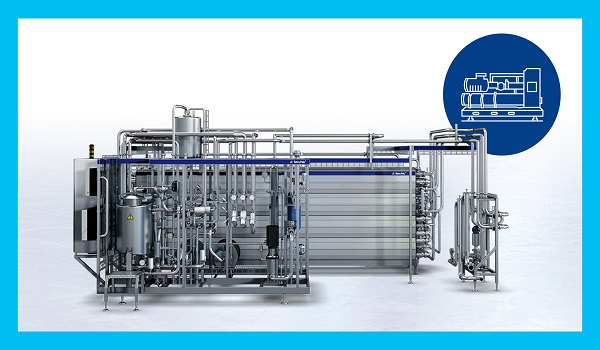
Tetra Pak has introduced a new Integrated Heat Pump system aimed at transforming pasteurization by sharply reducing energy consumption and carbon emissions. Announced from Lausanne, Switzerland, the technology expands the company’s Factory Sustainable Solutions portfolio and promises energy savings of up to 77% for global food and beverage manufacturers.
Pasteurization is among the most energy-intensive stages in food production, traditionally dependent on fossil-fuel boilers for heating and electric chillers for cooling. Tetra Pak’s new system replaces this dual setup with a high-efficiency electric heat pump that recovers and upgrades heat generated during the process. For every 1 kWh of electricity used, the system can reclaim up to 2 kWh of otherwise wasted heat—making it roughly three times more efficient than conventional boiler-based systems.
The recaptured heat is fed directly back into the pasteurization cycle, while the same system simultaneously produces ice water for cooling, removing the need for separate heating and cooling equipment. This integrated approach cuts operational costs and lowers dependence on fossil fuels, offering manufacturers insulation from volatile global energy prices.
Tetra Pak estimates that a standard dairy pasteurization line could reduce annual operating expenses by up to €230,000 and curb CO₂ emissions by as much as 650 tonnes. The technology is designed for high-volume applications, including chilled milk, cheese processing, fruit juice and ambient milk pre-treatment.
Nicole Uvenbeck, director of factory sustainable solutions and OEM components at Tetra Pak, said the system delivers major efficiency gains without compromising output. Fiona Liebehenz, vice president of key components, added that the launch underscores the company’s push to decarbonise high-energy stages of food production.
The Integrated Heat Pump system is now available worldwide as part of Tetra Pak’s sustainability-focused factory solutions lineup.