

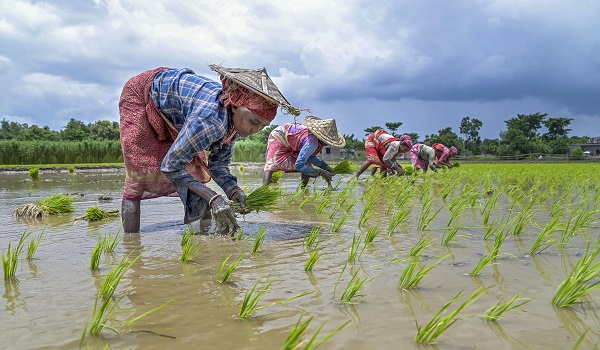
As global trade undergoes a major reset driven by tariffs, geopolitical tensions and supply-chain realignments, India’s agriculture and food sector is emerging as an unlikely but critical pillar of economic resilience. Despite long-standing structural challenges, the sector’s scale, adaptability and export potential position it as a strategic asset—one that the Union Budget 2026–27 could significantly unlock.
Agriculture employs nearly half of India’s workforce, underpins food security for 1.4 billion people and places the country among the world’s leading producers of cereals, fruits, vegetables, milk and seafood. Yet productivity remains uneven, farm incomes continue to lag non-farm wages, and the sector is highly sensitive to policy shifts. Fragmented landholdings, water stress, limited mechanization and inadequate access to technology have constrained growth for decades.
Food processing, a crucial link between farms and global markets, remains underdeveloped. While India produces vast quantities of agricultural commodities, it processes only a small share compared with peers such as China, Brazil and Thailand. The sector is dominated by micro, small and medium enterprises (MSMEs) that operate with limited access to credit, thin margins and weak integration into export supply chains.
However, recent global shocks have highlighted the sector’s resilience. During the pandemic and subsequent trade disruptions, agriculture continued to grow even as other sectors contracted. Strong domestic demand has provided stability, while export-oriented producers in seafood, rice, spices, sugar, dairy and processed foods have demonstrated increasing agility in navigating global markets.
The experience of the seafood industry, particularly shrimp exports, offers a case study in adaptation. When US tariff actions disrupted exports, Indian shrimp producers faced factory shutdowns and job losses. Instead of prolonged contraction, the industry diversified export destinations, expanded into East Asia, West Asia and Latin America, strengthened domestic consumption and increased focus on value-added processing.
This response underscored key lessons for the broader agri-food economy: diversification reduces long-term risk, value addition and branding matter more than bulk commodity exports, and coordinated action between policy, diplomacy and industry can drive rapid adjustment.
With globalization becoming more selective, countries are seeking reliable suppliers that combine scale with stability. India’s agri-food sector can scale exports faster than manufacturing, absorb labour amid global industrial uncertainty, support rural incomes and generate foreign exchange through processed and branded products. In an era of trade wars and sanctions, food itself is becoming a strategic resource.
Yet several bottlenecks persist. Export policies remain unpredictable, with sudden bans undermining India’s credibility as a supplier. High logistics costs, inadequate cold-chain infrastructure and regulatory complexity across states limit competitiveness. A disconnect between domestic farm policy and trade policy further complicates export growth.
The Union Budget 2026–27 offers an opportunity to address these gaps. Greater investment in agri-logistics—cold storage, refrigerated transport and modern warehousing—could sharply improve export readiness. Targeted support for food processing clusters, particularly MSMEs, would help move the sector up the value chain. Predictable trade policies, export promotion for processed foods and seafood, and funding for quality certification and traceability could strengthen India’s position in global markets.
As global uncertainty reshapes economic priorities, agriculture is no longer just a sector to be managed. With the right policy push, it could become one of India’s most powerful drivers of growth, resilience and strategic influence.