

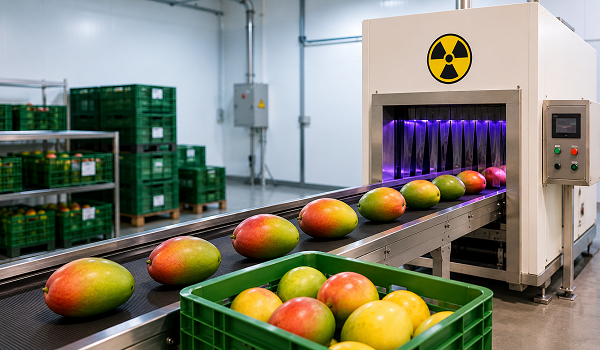
India’s efforts to expand food irradiation technology — aimed at reducing post-harvest losses and boosting agricultural exports — continue to face challenges related to high infrastructure costs, limited farmer incentives, and weak supply chain integration.
Food irradiation, which uses controlled ionising radiation to eliminate pests and extend shelf life, remains limited despite India being one of the world’s largest producers of fruits and vegetables. The country currently has only 19 operational irradiation plants, according to the Bhabha Atomic Research Centre, with just four certified for exports to the United States.
Experts estimate that 30–40% of India’s fruits and vegetables are lost due to inadequate post-harvest infrastructure. However, the high investment required for irradiation facilities and limited financial returns for farmers have slowed adoption.
The technology is mainly driven by exports, especially mango shipments to the US, which require irradiation at USDA-approved facilities. India’s mango exports to the US reached nearly $10 million in FY24, rising 130% year-on-year.
To strengthen the sector, the Centre has allocated ₹1,000 crore under the Pradhan Mantri Kisan Sampada Yojana for setting up 50 new multi-product irradiation units. Industry experts, however, say wider adoption will also depend on better cold-chain infrastructure, logistics support and stronger market incentives for growers.