

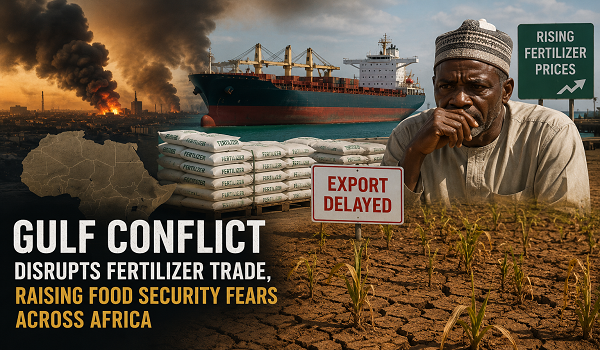
Escalating tensions in the Gulf region and disruptions to shipping through the Strait of Hormuz are triggering a global fertiliser and fuel crisis, raising concerns about food security in vulnerable economies across Africa and parts of Asia.
The sharp rise in fertilizer prices and shipment delays is already affecting farming communities dependent on imported agricultural inputs. According to the Food and Agriculture Organization, even small increases in fertilizer costs can significantly reduce usage among small farmers, lowering crop yields and worsening food shortages.
Urea prices have surged by more than 90% as the Strait of Hormuz — a key trade route for global fertilizer exports — faces severe disruption. Nearly one-third of global urea exports and major ammonia and phosphate shipments pass through the corridor from Gulf countries, including Qatar, Saudi Arabia and the United Arab Emirates.
Among the worst-hit countries is Malawi, which imports nearly 60% of its nitrogen fertilizers from Gulf nations. Smallholder farmers there are struggling with soaring fuel prices and fertilizer shortages ahead of the planting season.
The impact is spreading across Africa, with farmers in Nigeria, Senegal and Ghana reducing fertilizer usage or shifting to cheaper alternatives due to rising costs and delayed imports. South Africa is also forecasting one of its weakest wheat harvests in years amid escalating input expenses.
Relief agencies warn that prolonged shortages could allow wealthier countries to secure limited supplies first, leaving poorer agricultural economies exposed to deeper food insecurity and rising hunger risks in the coming crop season.