

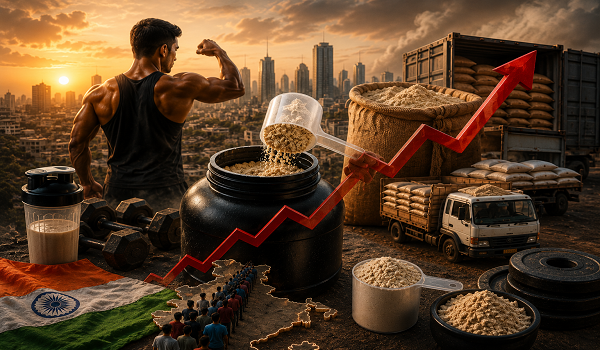
India’s fast-growing protein food and beverage market is beginning to face a major supply challenge as soaring global whey prices and tightening availability threaten to disrupt the country’s high-protein boom.
Driven by rising health awareness, fitness trends, and growing demand for convenient nutrition, Indian consumers are increasingly turning to protein shakes, bars, fortified snacks, and ready-to-drink beverages. What was once considered a niche category for gym-goers has rapidly entered the mainstream, with office professionals, young consumers, and families now embracing protein-rich diets.
The surge in demand has encouraged both established FMCG companies and emerging startups to expand their portfolios of high-protein products aggressively. Industry executives say segments such as protein bars, functional snacks, and protein beverages have recorded strong growth over the past two years.
However, the category’s rapid expansion is now colliding with a global whey shortage. Whey, a key ingredient used in protein supplements and fortified foods, has witnessed a sharp rise in international demand amid growing adoption of high-protein diets in markets such as the United States, Europe, and India.
According to industry executives, whey prices have surged nearly four times compared to earlier levels, creating pressure across the nutrition and functional food industry. Companies dependent on imported whey are facing increasing procurement costs and concerns over future supply availability.
The crisis is also prompting food brands to experiment with alternative ingredients and formats, including plant-based proteins, fermented proteins, and functional nutrition products aimed at reducing dependence on whey.
Experts believe the current situation highlights the widening gap between India’s accelerating protein consumption and the limited availability of high-quality protein ingredients globally. As consumer interest in nutrition-focused products continues to rise, manufacturers may increasingly look toward diversified protein sources, local production capabilities, and innovation-driven formulations to sustain growth in the category.