

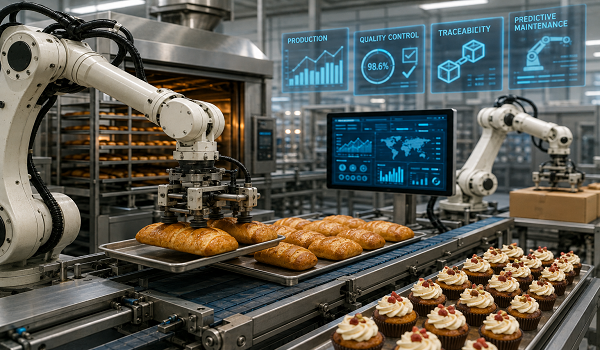
India’s bakery industry is undergoing a major technological transformation, with automation, robotics, artificial intelligence (AI), blockchain and digital monitoring systems increasingly becoming integral to production floors. As consumer demand for quality, consistency and healthier products rises, bakeries are turning to smart technologies to boost efficiency, improve food safety and reduce operational costs.
The Indian bakery market, estimated at around US$15.5 billion in 2025, is projected to reach more than US$32 billion by 2034, growing at a CAGR of nearly 9%. The sector’s rapid expansion is being fuelled by rising disposable incomes, urbanization, changing food habits, growing demand for ready-to-eat products, and the proliferation of modern retail and e-commerce channels.
Against this backdrop, technology adoption is emerging as a critical competitive differentiator. Industry experts note that bakeries are increasingly investing in automation solutions to address labour shortages, maintain product consistency and meet growing production demands.
One of the most visible changes is the deployment of robots for repetitive and labour-intensive tasks such as dough handling, tray loading, product sorting, packaging and palletizing. Automated systems are also being integrated into mixing, fermentation and baking operations, helping manufacturers improve productivity while reducing human error.
According to industry studies, automation can increase production output by 10–15%, while enhancing worker safety, quality assurance and traceability. By taking over physically demanding tasks, robots allow employees to focus on higher-value activities such as quality control, product development and process optimization.
The shift towards digitalization extends beyond factory automation. Bakery manufacturers are increasingly adopting Internet of Things (IoT)-enabled sensors, cloud-based monitoring systems and predictive maintenance technologies that provide real-time insights into equipment performance and production conditions.
Wireless Sensor Networks (WSNs), for example, are being used to monitor oven temperatures, baking conditions and product quality parameters in real time. These systems help manufacturers maintain consistency across batches while reducing energy consumption and wastage. Advanced sensor technologies also enable predictive maintenance, allowing operators to identify potential equipment failures before they disrupt production.
Blockchain technology is also gaining attention as food manufacturers seek greater transparency and traceability throughout the supply chain. By creating tamper-resistant digital records, blockchain systems enable businesses to track ingredients from source to shelf, verify authenticity and provide consumers with greater visibility into product origins.
The growing emphasis on transparency is particularly relevant as consumers increasingly demand clean-label, organic and health-focused bakery products. Manufacturers are responding with gluten-free, sugar-free, fortified, multigrain and whole-wheat offerings, supported by investments in research and development.
Digital platforms are further transforming how bakery businesses engage with consumers. Online ordering systems, food delivery apps, direct-to-consumer channels and data analytics tools are enabling bakeries to expand their reach, personalize offerings and better understand changing consumer preferences. Cloud kitchens and digital-first bakery brands are also contributing to the sector’s evolution.
Industry surveys indicate that bakery businesses are becoming more willing to invest in technology. A 2022 industry survey found that nearly half of bakery companies planned investments in new machinery and innovative products, while a significant proportion were exploring automation technologies to improve operational performance.
Despite the benefits, challenges remain. High capital expenditure, integration complexities, shortage of skilled personnel and resistance to organizational change continue to slow technology adoption, particularly among small and medium-sized bakeries. Regulatory compliance and traceability requirements also add pressure on businesses to modernize operations.
Nevertheless, experts believe digital transformation will play a decisive role in shaping the future of India’s bakery industry. By combining automation, robotics, blockchain and smart monitoring technologies, bakery manufacturers are creating more resilient, efficient and sustainable operations capable of meeting evolving consumer expectations.