

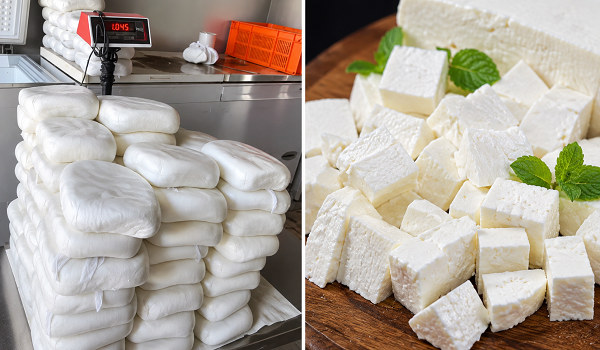
Uttar Pradesh authorities intensify inspections ahead of the festive season, destroying 868 kg of paneer and 170 kg of khoya in Ghaziabad
Food-safety authorities in Uttar Pradesh have intensified their crackdown on suspected dairy adulteration ahead of the festive season, destroying more than 1,000 kg of paneer and khoya during raids across Ghaziabad.
The Uttar Pradesh Food Safety and Drug Administration conducted inspections at multiple dairy establishments, where officials destroyed 868 kg of paneer and 170 kg of khoya on the spot, according to the Food Safety and Standards Authority of India (FSSAI).
The regulator shared details of the enforcement action on social media, describing it as part of its nationwide campaign against food adulteration.
The Ghaziabad raids come days after authorities conducted a major operation at a cheese manufacturing facility in Mathura’s Kosikalan area. Officials reportedly destroyed around 1,500 kg of paneer and 3,000 litres of milk after finding products considered unfit for consumption.
FSSAI said nine samples, including paneer, milk and oil, were also sent for laboratory testing as part of the Mathura investigation.
The renewed enforcement comes at a critical time for India’s dairy market. Demand for paneer, khoya and other milk-based products typically rises during the festive season, increasing both production and the risk of food-safety violations.
Authorities have repeatedly warned that adulteration can involve substances used to alter the appearance, texture, consistency or shelf life of dairy products. Suspected adulterated products are generally seized and subjected to laboratory testing to determine the nature of any contamination.
For consumers, the health risks depend on the substance involved and the level of exposure. Some adulterants can cause gastrointestinal problems, while certain chemicals can pose more serious health risks.
FSSAI advises consumers to exercise caution when buying dairy products, particularly during periods of heightened demand. Checking packaging, expiry or best-before dates and FSSAI licence details, as well as purchasing from reputable sellers, can help reduce risks.
However, authorities caution that appearance, taste, smell or price alone cannot conclusively establish whether paneer or milk has been adulterated. Laboratory analysis remains the more reliable method of identifying specific adulterants.
FSSAI’s DART (Detect Adulteration with Rapid Test) initiative also provides guidance on simple household checks for certain forms of food adulteration. Such tests can serve as preliminary checks but should not be treated as definitive proof of contamination.
The latest raids signal that regulators intend to maintain pressure on dairy businesses as the festive shopping season approaches.
With paneer and khoya among the most widely used ingredients in Indian sweets and festive foods, the message from food-safety authorities is straightforward: as demand rises, scrutiny of what reaches consumers’ plates is rising with it.