

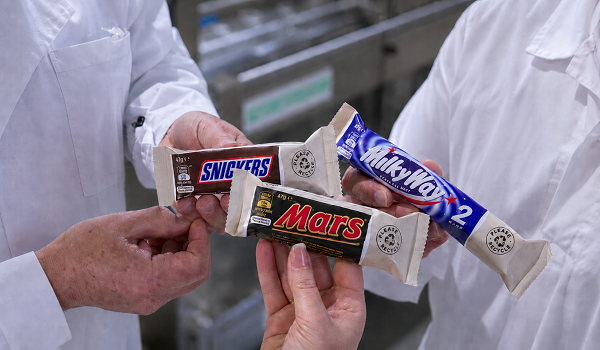
Global snacking giants Mars and Mondelēz International have released their latest sustainability reports, highlighting progress in packaging transformation initiatives while acknowledging challenges in achieving several of their previously announced 2025 sustainability targets.
Both companies reported improvements in reducing virgin plastic use and increasing the adoption of recyclable packaging solutions, but admitted that infrastructure constraints, material availability and implementation complexities slowed overall progress.
Mars reported a 5.9% reduction in virgin plastic usage across key categories compared with its 2019 baseline, supported by greater use of post-consumer recycled (PCR) materials. The company noted that it has introduced 100% recycled PET (rPET) packaging in select club jars for brands such as M&M’s, Skittles and Starburst.
According to its sustainability report, Mars increased the share of packaging designed to be reusable, recyclable or compostable from 61% in 2023 to 67.6% in 2025. Recycled content in packaging also rose to 9.2%, although the company remained below its previously stated target of incorporating 30% recycled material.
“The pace of progress remains closely linked to the readiness of these systems and the availability of food-safe recycled materials in many markets,” Mars said in its report, highlighting ongoing limitations in recycling infrastructure.
The company also pointed to initiatives aimed at improving circularity, including its involvement in extended producer responsibility programmes and collaborative efforts to improve flexible plastic recycling systems. Mars additionally highlighted research into compostable packaging alternatives and pilot projects involving paper-based packaging solutions.
Meanwhile, Mondelēz International indicated that it is extending its packaging sustainability goals beyond 2025 and shifting focus towards revised targets for 2030.
The company stated that evolving regulations, changing consumer expectations and the complexity of implementing new packaging technologies had affected progress against earlier goals.
Mondelēz reported that 96% of its packaging portfolio was designed for recyclability in 2025, remaining unchanged from previous years and falling short of its 98% target. However, the company exceeded its virgin plastic reduction goal, achieving an 11.5% reduction compared with a 2020 baseline.
Use of recycled plastic content within its packaging portfolio increased to 3.7%, though this also remained below its targeted level.
“With a strong pipeline of projects due to be implemented, we are confident in our ability to further reduce our use of virgin rigid plastic toward 2030,” the company said in its report.
Industry observers note that the reports reflect broader challenges facing the packaging industry globally, where ambitious sustainability commitments increasingly depend on recycling infrastructure development, regulatory support and scalable access to food-grade recycled materials.
While both companies continue to advance their packaging transformation strategies, the latest reports underline that achieving long-term circular economy goals remains a complex and evolving process.