

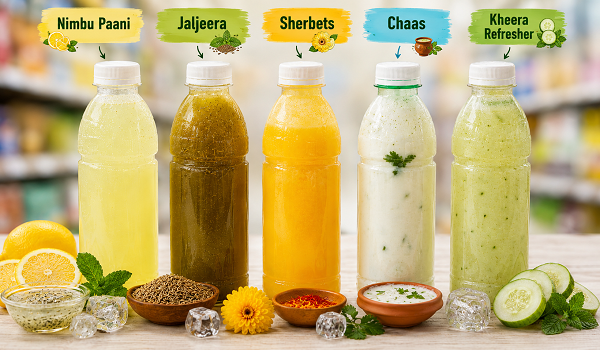
India’s traditional beverage market is undergoing a gradual transformation as familiar drinks once dominated by roadside vendors and local stalls increasingly move into organised retail and packaged formats. Products such as nimbu paani, jaljeera, sherbets, chaas and regional refreshers are finding growing space on supermarket shelves and quick-commerce platforms, signalling a shift in consumption and distribution patterns.
Industry observers suggest that the trend is not driven by the emergence of new beverage categories but rather by the formalisation of long-established drinking habits. Beverages that have traditionally been consumed through informal channels are now being repositioned through branded packaging, standardised production and wider retail accessibility.
The transition is being supported by changing consumer expectations across income groups. While affordability remains important, purchase decisions are increasingly influenced by factors such as hygiene, quality consistency, and convenience. Consumers, particularly in lower- and middle-income segments, are increasingly willing to choose packaged products when prices remain within reach.
Growing awareness around food safety and sanitation standards is also contributing to the shift. Informal beverage outlets continue to hold a significant market presence, but concerns over water quality, storage conditions and preparation methods are encouraging a section of consumers to seek safer and more predictable alternatives.
Industry experts note that packaged traditional beverages are filling a category gap that remained relatively underdeveloped for years. Global beverage companies largely concentrated on carbonated soft drinks and select juice segments, leaving substantial room for local and regional companies to build organised offerings around Indian beverage traditions.
This opportunity has prompted brands to experiment with products ranging from aam panna and masala chaas to sattu-based beverages, kokum drinks, herbal refreshments and jeera-based formulations. Rather than competing directly with carbonated drinks, many of these products are attempting to convert already existing demand into organised consumption.
The rise of modern retail infrastructure has further accelerated this transition. Expansion in cold-chain facilities, wider retail networks and rapid growth in quick-commerce platforms have made it easier for ready-to-drink products to reach consumers across urban and semi-urban markets.
Quick-commerce, in particular, is emerging as a significant driver of product discovery. Faster delivery cycles and increased digital visibility are allowing consumers to experiment with regional beverage options that previously had limited shelf presence.
Despite increasing interest in the category, industry stakeholders indicate that large-scale growth will depend on several operational factors. Pricing strategy, distribution efficiency, availability in kirana stores and repeat consumer purchases remain critical to sustaining momentum.
Market trends indicate steady growth in packaged dairy-based beverages such as lassi and buttermilk, while newer categories including regional and functional refreshers are gradually strengthening their presence in organised retail channels.
As India’s beverage landscape evolves, traditional drinks appear to be moving beyond their conventional origins, creating a new intersection between cultural familiarity and modern retail convenience.