

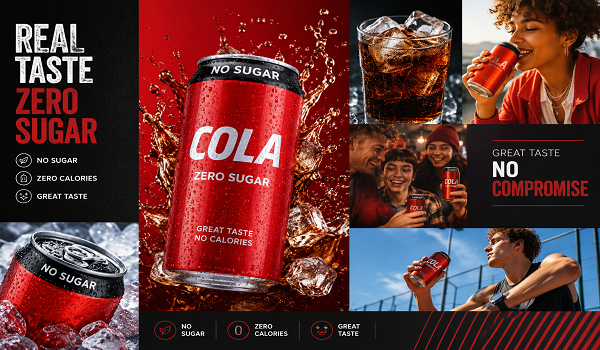
Coca-Cola has unveiled a new global visual identity system as part of a broader business strategy to reinforce its brand, protect pricing power and accelerate growth in key segments such as Coca-Cola Zero Sugar.
While the redesign appears cosmetic on the surface, the company says it is intended to create a more consistent brand experience across every consumer touchpoint—from supermarket shelves and delivery apps to social media platforms and stadium screens.
The refreshed identity retains Coca-Cola’s signature Spencerian script, Dynamic Ribbon, Arden Square and red-and-white colour palette while standardising how these assets are used across more than 200 markets.
The move comes as Coca-Cola navigates a changing beverage landscape. Traditional carbonated soft drinks have matured in several developed markets, while consumers increasingly favour lower-sugar, functional and wellness-focused beverages. At the same time, prolonged inflation has made consumers more price-conscious, increasing the importance of maintaining strong brand equity.
Company executives said the initiative is designed to strengthen Coca-Cola’s most valuable asset—its global brand—rather than reinvent it.
“We wanted to create a stronger foundation for growth while staying unmistakably Coca-Cola,” Arnab Roy, President of Coca-Cola Global Category, said while announcing the new identity.
A key focus of the refresh is Coca-Cola Zero Sugar, one of the company’s fastest-growing product lines. The updated packaging gives greater prominence to the “Zero Sugar” label and introduces a bolder black Dynamic Ribbon, making the variant easier to identify while reinforcing its connection to the core Coca-Cola brand.
The redesign also reflects the growing importance of digital media and AI-powered marketing. Unlike traditional branding built primarily for packaging and television, the new identity has been developed to work seamlessly across social media, e-commerce platforms, retail media, digital advertising and connected devices.
To support this shift, Coca-Cola has introduced updated Brand Center and Design Intelligence tools that will help global teams and agency partners maintain visual consistency, even as marketing content is increasingly created using AI-assisted workflows.
According to the company, the new system is intended to improve brand governance, reduce inconsistencies across markets and ensure that every consumer interaction strengthens recognition of the Coca-Cola brand.
Industry observers say the strategy goes beyond design. By reinforcing familiar visual assets, Coca-Cola aims to enhance marketing effectiveness, preserve premium pricing, simplify global execution and support long-term growth in an increasingly competitive beverage market.
With the refresh, Coca-Cola is betting that making the world’s most recognisable soft drink brand even more consistent will help it stay relevant as consumer preferences and media consumption continue to evolve.