

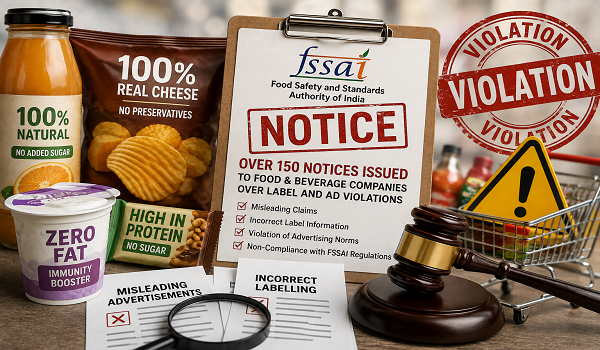
India’s food safety regulator has stepped up scrutiny of food, beverage and food-service companies, citing misleading advertisements, false claims and labelling violations.
The Food Safety and Standards Authority of India (FSSAI) has issued more than 150 notices to food and beverage companies for alleged violations involving misleading advertisements, false claims and improper labelling, placing several major consumer brands under regulatory scrutiny.
Companies named in the notices include Nestle India, PepsiCo, Mondelez India, Coca-Cola India, Danone India, Ferrero India, Diageo and Pernod Ricard, along with energy-drink makers Red Bull, Monster and Hell Energy.
The regulator has also seized products over non-compliance with food safety and standards regulations. In the quick-commerce segment, FSSAI issued 12 notices to platforms including Flipkart Minutes and Amazon Now. The regulator has also cancelled the licence of an Amazon warehouse, according to FSSAI data.
FSSAI’s action extends beyond packaged food and beverages to restaurants, cafes and other food-service operators.
More than 30 notices were issued to establishments including KFC, Pizza Hut, Domino’s, Costa Coffee and McDonald’s.
The regulator also issued more than 20 notices to hotels and restaurants, including major international hospitality chains such as Marriott, Hilton, Hyatt, Radisson Hotel Group, Four Seasons and Shangri-La.
The violations involving hotels and restaurants included issues related to calorie disclosures and menu labelling, highlighting growing regulatory attention on how nutritional information is presented to consumers.
The latest enforcement drive comes as food-safety authorities intensify their focus on consumer-facing claims, product information and compliance across the food and hospitality ecosystem. For large brands, the scrutiny raises the stakes around advertising language, nutritional claims and labelling practices as regulators seek greater transparency for consumers.