

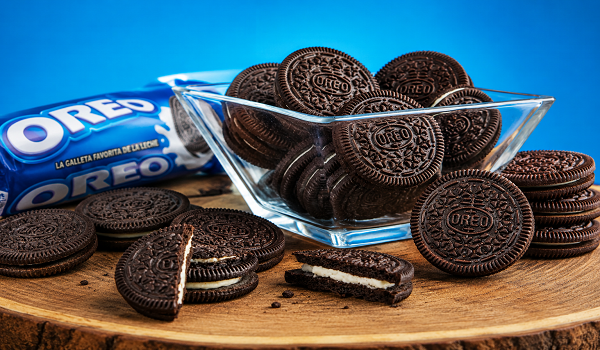
Oreo is stepping up flavour experimentation and limited-edition launches as the 114-year-old cookie brand looks for new ways to attract consumers without losing the appeal of its original product.
Owned by Mondelēz International, Oreo has introduced dozens of flavour variations over the years, ranging from Strawberry Milkshake and Brownie Batter to Birthday Cake and Candy Corn. Its latest experiments go further, with Chicken & Waffles, Deep Fried and Banana Pudding joining the lineup.
The strategy reflects a growing focus on using flavour innovation to keep an established brand connected with changing consumer tastes, food trends and cultural conversations.
Chrissy Briganti, senior director of Oreo innovation, said new flavours help the brand create playful connections with existing fans while also introducing Oreo to new consumers.
Behind the launches is a combination of research and development, consumer insights and trend monitoring. Oreo teams track changing preferences, social media conversations and developments across the wider food industry, rather than looking only at trends within packaged biscuits and snacks.
The company does not intend to turn every emerging trend into an Oreo. Instead, it looks for flavours and concepts with enough consumer interest to work within the brand and create excitement around a limited-time launch.
Its latest varieties reflect several trends currently influencing food innovation. Banana Pudding draws on consumer interest in nostalgic desserts, while Deep Fried takes inspiration from state-fair-style indulgence. Chicken & Waffles brings the growing sweet-and-savory trend into the cookie category.
Limited-time availability is an important part of the strategy. It allows Oreo to experiment with unusual concepts and create novelty without permanently expanding its core range.
Despite the attention generated by experimental flavours, traditional Oreo products continue to account for the majority of the brand’s business. Innovation is therefore being used to complement the original cookie rather than replace it.
That balance is particularly important given Oreo’s scale. According to Mondelēz, the brand generates more than $4 billion in annual sales and is the world’s best-selling cookie brand in retail. Around 60 billion Oreo cookies are estimated to be sold globally each year, with approximately one-third consumed in the United States.
Mondelēz is also looking beyond conventional grocery and retail channels for future growth. Company executives indicated in July that additional Oreo innovation is under development, with opportunities to expand into new categories and away-from-home consumption.
Collaborations are becoming another part of the strategy. Oreo has worked with other major brands and cultural properties to develop limited-edition products capable of attracting attention beyond the traditional cookie aisle.
These have included Reese’s Oreo products developed with Hershey, as well as a collaboration with K-pop group BTS inspired by hotteok, the popular Korean street food.
Such partnerships allow Oreo to connect product innovation with entertainment, popular culture and established food brands, creating another reason for consumers to revisit a product that has been on the market since 1912.
The challenge is to keep experimentation from weakening the identity that made Oreo successful in the first place. With more than a century of brand recognition behind it, the company still needs to serve consumers who simply want the familiar original cookie.
Mondelēz’s approach is therefore to treat unusual flavours, collaborations and limited editions as extensions of Oreo rather than replacements for its core range.
For Oreo, constant experimentation is becoming a way to keep an old brand feeling new. More than a century after its launch, the company is betting that its next phase of growth will come from combining the familiarity of the original Oreo with a steady stream of unexpected new experiences.