

Proposed school food rules could affect shops near 1.5 million schools
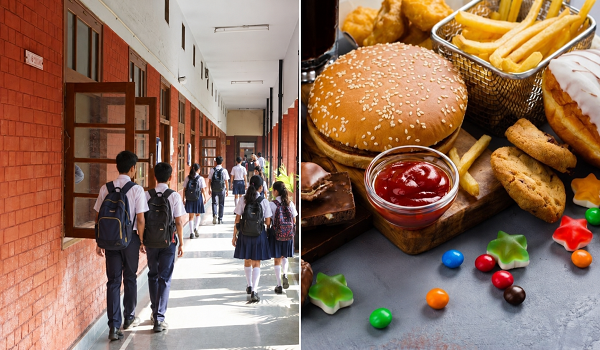
India is considering tighter restrictions on the sale of foods high in fat, salt and sugar (HFSS) within 50 metres of schools. The proposal could affect shops, food stalls and restaurants near the country’s 1.5 million schools, while prompting food manufacturers to review their products.
The Food Safety and Standards Authority of India (FSSAI) published proposed thresholds for fat, salt and sugar in August to identify products that could face restrictions. Public comments are open until October 6. No implementation date has been announced.
FSSAI chief executive Rajit Punhani said the proposed “safe food” schools plan aims to discourage unhealthy eating habits early in life. He said shops could continue selling products that do not fall into the HFSS category, and that the rules could encourage manufacturers to reformulate their products.
For retailers near schools, the potential loss of sales is a concern. Shopkeepers in Bhubaneswar told Reuters their sales could fall by a third or more if the restrictions take effect. The Confederation of Indian Food Trade and Industry has argued that a 50-metre rule would be difficult to enforce in busy commercial areas that also serve the wider public. In a draft submission reviewed by Reuters, it urged the government to limit restrictions to sales inside schools.
The proposal comes amid rising childhood obesity. World Obesity Federation figures cited by Reuters show that the number of Indian children aged 5–19 classified as overweight or obese rose from 28 million in 2015 to 41 million in 2025. The figure is projected to reach 56 million by 2040.
Maharashtra has already taken a stricter approach. State food safety commissioner Tukaram Mundhe told Reuters that shops within 50 metres of schools cannot stock HFSS products. State data cited in the report recorded violations at 133 shops, with 51 ordered to discontinue business.
The proposed rules would add to the regulatory issues facing major food and beverage companies, including PepsiCo, Coca-Cola, Mondelez and Nestlé, as India also considers front-of-pack warnings for products high in fat, salt and sugar. PepsiCo and Nestlé told Reuters they already have global policies on products sold in schools. Coca-Cola and Mondelez did not respond to its queries.
Other countries have adopted school food restrictions. Researchers at the University of North Carolina say five countries have proposed or implemented restrictions around schools, while 48 have restricted junk-food sales inside schools. Chile introduced warning labels and restrictions on junk-food sales and promotion in schools in 2016. A study cited by Reuters associated exposure to the Chilean law with a lower probability of excess weight among children.
If adopted, India’s proposed rule could change what retailers stock near schools and give manufacturers a further reason to reformulate HFSS products.