

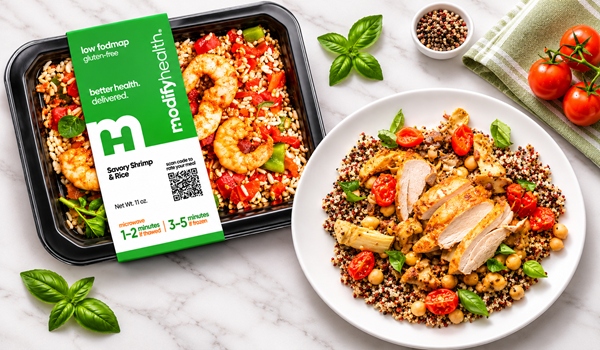
The US Food and Drug Administration (FDA) will let food companies label products as “low-FODMAP”. The label helps shoppers find foods that are gentle on the stomach and unlikely to trigger symptoms of irritable bowel syndrome (IBS).
The agency said it will not take enforcement action against companies that use the label. The FDA does not treat “low-FODMAP” as a nutrient content claim. It also said it will not act against the label as a statement that a food helps people avoid certain ingredients or suits a special diet.
The decision follows a lawsuit claiming the earlier restrictions violated the First Amendment, the part of the US Constitution that protects free speech. A federal appeals court had revived the case.
FODMAP stands for fermentable oligosaccharides, disaccharides, monosaccharides and polyols. These are carbohydrates and sugars that can cause digestive problems. People on a low-FODMAP diet usually avoid foods high in them, such as onions, garlic and dairy. The diet is strict and meant to be temporary. It is used to ease the symptoms of IBS and other gut problems.
The case was brought by Gourmend Foods, which makes low-FODMAP broths and seasoning kits. In 2023, the company asked the US Department of Agriculture for permission to use the label on its beef broth. The request was rejected after the department consulted the FDA.
Gourmend owner Ketan Vakil said the policy change will make it easier for people with serious stomach problems to find foods that suit them. He said the company no longer has to fear punishment for labelling its products truthfully. Justin Pearson of the Institute for Justice, which represented Gourmend, said the old rules were unconstitutional.
The label could become more useful as weight-loss drugs known as GLP-1s become more common, since they slow digestion and can cause bloating and gas. Up to 45 million people in the US have IBS, and one study found that 70% of them got relief from a low-FODMAP diet.
However, the FDA’s decision does not protect companies from lawsuits filed by consumers. Brands already face a wave of lawsuits over “zero-sugar” labels on products that contain allulose, even though the FDA said it would not take action on those labels.
In India, health and nutrition claims on food labels fall under FSSAI’s Advertising and Claims Regulations, 2018. Several claims can be made without the regulator’s prior approval, but claims not standardised under the rules may need approval from the food authority and must be backed by sound science. “Low-FODMAP” does not appear to be a standard claim. That means an Indian brand would most likely need FSSAI approval to use it. fssai
Indian doctors are also unsure that a single standard would work here. A study of Indian patients argued for individualised diets rather than a universal low-FODMAP diet, noting that India’s varied eating habits make such diets hard to design. If India adopts a similar label, it may first need FODMAP testing data for Indian foods, along with clear FSSAI limits.