

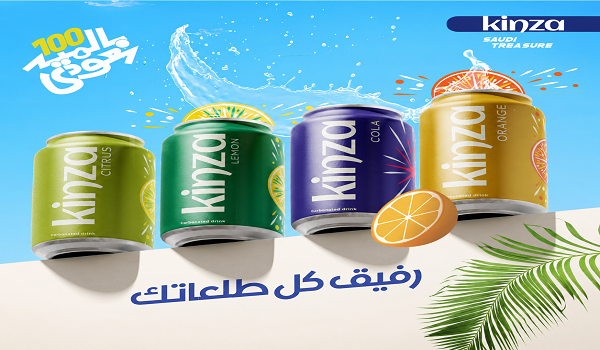
Kinza eyes Malaysia and Indonesia with local flavours, pricing, distribution and manufacturing plans
Saudi Arabian soft drinks company Kinza is entering the Southeast Asian market, with Malaysia and Indonesia emerging as its first key destinations as the brand seeks to build an international presence through a country-specific localisation strategy.
Currently manufactured in Jeddah and exported to more than 75 international markets, Kinza plans to adapt its products, pricing, packaging, distribution and marketing to the requirements of individual Southeast Asian markets rather than adopting a single regional strategy.
The move comes as food and beverage companies increasingly turn to localisation to compete in Asia, adapting products and consumer propositions around local tastes, purchasing behaviour and cultural preferences.
Kinza Founder Bandar Okrin said Southeast Asia represents an important next phase in the company’s international growth, with Malaysia and Indonesia forming the core of its regional strategy.
Although the two countries are geographically close, Kinza believes their consumers have significantly different tastes and purchasing habits.
In Malaysia, the company plans to focus on local demand for reduced- and zero-sugar beverages.
In Indonesia, meanwhile, its strategy will place greater emphasis on taste, affordability and distribution channels suited to local purchasing patterns.
Okrin said the company’s objective is not simply to enter a large number of markets, but to establish the right partnerships and develop a strong understanding of local consumers.
The company also plans to build the distribution and manufacturing infrastructure required to support long-term expansion.
Kinza has begun establishing both online and offline channels in Southeast Asia while initially supplying the region from its manufacturing facility in Jeddah.
However, the company sees local production as an important part of its future growth strategy.
Manufacturing within the region could help Kinza shorten supply lead times and lower logistics costs while enabling it to respond more rapidly to changes in consumer demand.
Local production would also give the company greater flexibility to adjust pack sizes, pricing, product mix and marketing according to individual markets and distribution channels.
Kinza already has a broad portfolio that could support such expansion. Its range includes cola, lemon, orange, citrus, blackcurrant and pomegranate beverages, along with zero-sugar drinks, soda water and energy drinks.
Building a Saudi brand beyond the GCC
Kinza’s international expansion is also built around its Saudi identity.
According to Okrin, the brand’s growth in Saudi Arabia has been driven partly by its ability to establish a cultural and emotional connection with consumers, particularly through everyday consumption, social gatherings and celebrations.
The company aims to recreate that connection in new markets while adapting its products to local expectations.
Kinza has also used international sports sponsorships to increase its visibility outside Saudi Arabia. Its partnerships have included the Spanish Super Cup, French Super Cup and FIBA West Asia Super League (WASL).
These activities form part of the company’s broader ambition to develop Kinza into a globally recognised Saudi consumer brand.
Malaysia and Indonesia are particularly significant targets because of their large populations and substantial Muslim consumer bases. However, Kinza’s ambitions extend beyond these two markets.
The company is also exploring opportunities in other parts of Asia, including South and Central Asia, as part of its wider international expansion programme.
The strategy reflects a growing opportunity for brands with distinctive regional identities as younger consumers become more willing to experiment with international products that offer a clear cultural story and differentiated proposition.
For Kinza, the challenge will be to balance its Saudi heritage with the need to tailor products and commercial strategies to individual Asian markets.
The company believes its experience across Saudi Arabia, the GCC and the Levant provides a foundation for building consumer relationships in new territories.
Its Southeast Asian expansion therefore represents more than an export push from Jeddah. Kinza is positioning localisation — from product formulation and pricing to distribution and eventually manufacturing — as a central part of its strategy to build a long-term soft drinks business across Asia.