

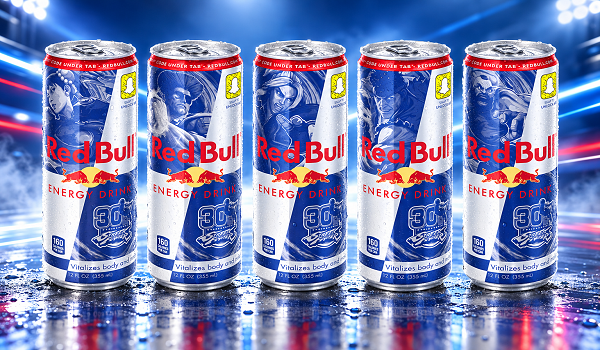
Red Bull has approached the High Court challenging an order issued by the Food Safety and Standards Authority of India (FSSAI) directing the company to stop using the term ‘energy’ on its beverages, labels and promotional material.
The company has contended that FSSAI passed the order without first issuing a show-cause notice or providing it an opportunity to present its case.
During the hearing, the High Court asked FSSAI to ascertain whether any notice had been issued to Red Bull before the regulatory direction was passed. The matter has been posted for further hearing on Tuesday.
The legal challenge comes after FSSAI directed several beverage brands to remove the term ‘energy’ from their product labels, marketing material and advertisements within 90 days.
The July 1 directive covered Red Bull, Sting, PepsiCo’s Adrenaline Rush, Campa Gold Boost, Hell Energy and Monster.
FSSAI’s action is based on its position that ‘energy drink’ is not a separately recognised food category under the country’s existing food-safety framework.
The regulator has cited the absence of defined category standards and has also raised concerns over claims associated with such products, including statements suggesting that the beverages can “vitalise” the body and mind.
The action has created uncertainty for beverage companies that have marketed caffeinated products as energy drinks for years.
At a meeting with beverage manufacturers on July 24, FSSAI suggested that affected products could instead be described as ‘caffeinated beverages’.
However, industry representatives have raised concerns about the proposed nomenclature, arguing that ‘caffeinated beverages’ is a much broader description that could encompass a wide range of products, from soft drinks to coffee.
According to industry representatives, using the broader term could make it difficult for consumers to distinguish between conventional caffeinated beverages and products specifically formulated and marketed as energy drinks.
The beverage industry has also highlighted what it sees as a shift in FSSAI’s regulatory position.
In an April 2024 communication, FSSAI had permitted the use of the term ‘energy drinks’ for products licensed under the category of caffeinated beverages, according to industry representatives.
The regulator had also prescribed caffeine limits for such beverages in 2016 and introduced requirements relating to the disclosure of caffeine content and other information on product labels.
The industry is now seeking greater clarity on how the latest directive aligns with the earlier regulatory framework.
The Indian Beverage Association, whose members include Red Bull, PepsiCo and Reliance, has called for a consultative and risk-based approach before enforcement action is taken.
It has argued that companies should have an opportunity to present their technical and legal positions before any regulatory measures are implemented.
Brands begin changing packaging
The FSSAI directive has already prompted some beverage companies to review their packaging and advertising.
PepsiCo has said it is removing the word ‘energy’ from its Sting branding to comply with applicable regulatory requirements.
For companies operating in the segment, the issue extends beyond the terminology used on labels. Any change could require revisions to packaging, advertising campaigns, marketing communication and product positioning.
Red Bull’s court challenge could therefore have implications for other companies affected by the FSSAI directive, particularly if the High Court seeks greater procedural clarity from the regulator.
The case also brings into focus the regulatory treatment of a beverage category that has developed significantly in India while the terminology and standards governing such products continue to evolve.
The High Court’s proceedings will now determine whether FSSAI followed the required process before directing Red Bull to remove the term ‘energy’.