

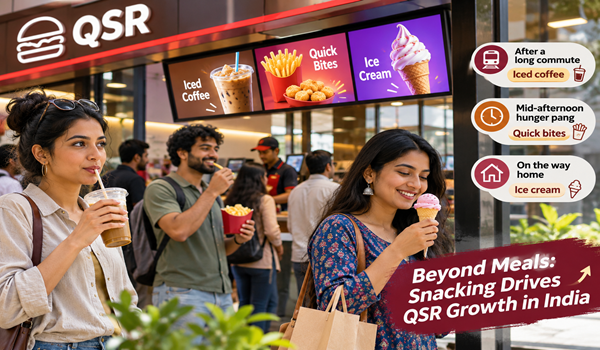
Indians no longer head to fast-food counters only at lunch and dinner. The iced coffee after a long commute, the mid-afternoon hunger pang, the ice cream picked up on the way home: these small, unplanned purchases are turning into serious business for quick-service restaurant (QSR) chains, and brands are reshaping themselves to win them.
The next phase of QSR growth in India will come less from bigger meals and more from filling the gaps between them.
The day has lost its shape
Part of the shift comes down to how people now live. Hybrid work, night shifts and loose college timetables mean the classic one o’clock lunch break no longer anchors the day. People eat when they feel like it. Younger consumers, Gen Z especially, snack often, in small portions and on impulse.
That changes the nature of the purchase. A meal out involves choices: where to go, with whom, and how much to spend. Grabbing a drink or a snack involves almost none. For brands, that is a chance to become part of a customer’s regular week rather than an occasional weekend treat. How often someone walks in now matters as much as how much they spend.
Lighter menus, lighter kitchens
Chains are responding with menus built for different moods. Full meals remain the backbone, but shakes, soft serve, desserts, quick bites and beverages are getting more space. These items are easier to run too. They share base ingredients, take seconds to put together and need little kitchen equipment, and customers can adjust sweetness, ice, milk or toppings in ways a cooked dish rarely allows.
The channel matters as well. An afternoon drink is usually made and finished within minutes, which suits dine-in and takeaway. Delivery and quick commerce have made food available around the clock, but many snacks and desserts don’t survive the trip. When an order arrives soggy or melted, customers blame the brand, not the rider. A short delivery menu of items that travel well beats a long one that disappoints.
Price it like a habit
Small occasions need small prices. Entry-level price points have reliably pulled in footfall across the sector, because once something is cheap enough, buying it stops being a decision and becomes routine.
Judge it a month later, not at launch
There is a clear difference between a drink that pads a meal bill and one that brings someone in on its own. The first is upselling. The second is real growth. Launch buzz, boosted by social media, can blur the two. The better test is what customers do a month later: whether they return for the item alone, and how often.
Don’t slow down the rush
There is a catch. Most revenue still comes in at lunch and dinner, and every extra ingredient or training step can slow those peak hours. A new item earns its place only if it keeps the queue moving at peak times while putting idle staff and equipment to work in the quieter hours.
Meals aren’t going anywhere. But the brands that win the coming years will be the ones customers reach for every day, not just on special occasions.