

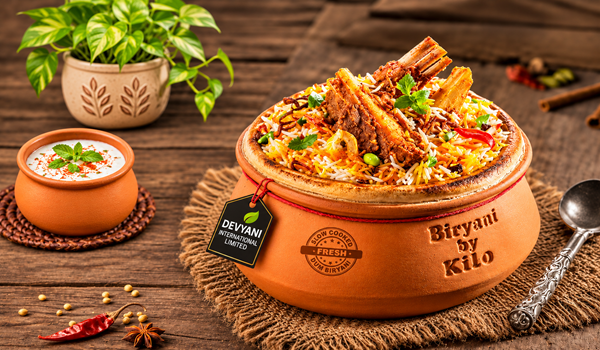
Devyani International is witnessing improving performance from its homegrown food brands, with Biryani By Kilo and Vaango emerging as promising contributors to its growth beyond established international franchises KFC and Pizza Hut.
The company’s own-brand portfolio recorded revenue of Rs 121.1 crore in the second quarter of FY27, up from Rs 97.8 crore in the corresponding quarter last year. More significantly, the portfolio’s brand contribution margin improved to 9.4% from just 0.6% a year earlier, indicating a substantial improvement in operating performance.
Biryani By Kilo emerged as the stronger performer during the quarter, reporting same-store sales growth of 8.1%. Its average daily sales reached Rs 72,000, while the brand added six net new outlets during the period.
Vaango also delivered encouraging results, recording same-store sales growth of 6.9% and average daily sales of Rs 24,000. Together, the two brands added seven net stores during the quarter, reflecting the company’s continued efforts to expand its presence in the domestic food service market.
The performance comes as Devyani International looks to strengthen its portfolio of Indian food brands and build additional growth drivers beyond its large international franchise operations. While KFC continues to provide significant scale to the business, improving performance from its homegrown concepts could help diversify revenue streams and create new opportunities for growth.
The company’s consolidated financial performance also showed improvement. Its net loss narrowed sharply to Rs 24 lakh in the second quarter of FY27, compared with a loss of Rs 21.89 crore in the corresponding period last year.
The latest results highlight the growing importance of smaller domestic brands in Devyani’s business strategy. Biryani By Kilo and Vaango are still considerably smaller than its KFC and Pizza Hut operations, but rising same-store sales, expanding outlets and improved contribution margins suggest that these businesses are gaining momentum.
For Devyani, the challenge will be to sustain this performance while expanding the reach and profitability of its Indian brands. As competition intensifies in India’s organised food service market, a stronger portfolio of locally relevant food concepts could provide the company with an additional growth engine and reduce its dependence on international franchises.