

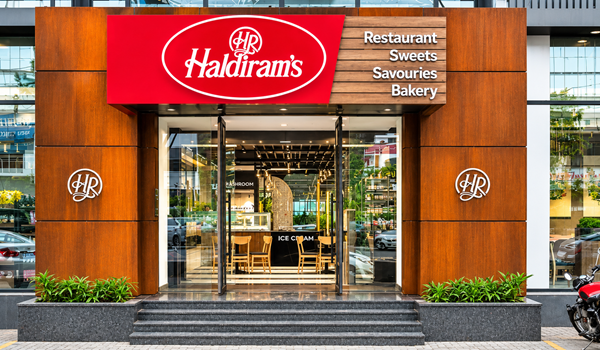
Haldiram Snacks Food has begun preparations for a possible stock market listing, offering another sign of how far India’s organised namkeen business has grown. According to a report in The Economic Times, the proposed initial public offering (IPO) could raise about ₹10,000 crore and value the company at more than ₹1 lakh crore. A listing may take place in late 2027, although the timetable and issue size remain tentative.
A company executive cited in the report said a project management team had started work on the process. Preparation could take six to twelve months or longer because the business operates through a complex structure. Draft offer documents have not yet been filed with the Securities and Exchange Board of India, so the final terms will depend on further decisions and regulatory steps.
The proposed listing follows a period of significant investor interest. In March 2025, Singapore-based Temasek agreed to acquire a stake of nearly 10%, in a transaction Reuters said valued Haldiram at roughly $10 billion. Abu Dhabi’s International Holding Company and Alpha Wave Global also invested, bringing the three investors’ combined holding to about 15%. Consumer investment firm L Catterton announced an investment in December 2025, subsequently cleared by the Competition Commission of India in February 2026.
The business had already undergone a major reorganisation. For years, the Delhi and Nagpur branches of the founding family ran separate operations under the Haldiram name. The Competition Commission approved the merger of their packaged-food businesses in April 2023. Under the arrangement, Delhi shareholders received 56% of the combined entity and Nagpur shareholders 44%. The integrated company began operating in FY25.
Financial performance provides context for the interest. Crisil Ratings reported revenue of ₹12,977 crore and net profit of ₹1,195 crore for FY25. Revenue reached ₹7,762 crore in the first half of FY26, with an operating margin near 19%. Crisil projected full-year growth of 9–10%, while noting merger-related difficulties and weaker exports following US tariffs. Namkeen accounted for more than half of sales.
The brand traces its beginnings to 1937, when Ganga Bhishen Agarwal, popularly known as Haldiram Ji, opened a shop in Bikaner. Its expansion into packaged bhujia and other snacks helped carry regional flavours beyond their places of origin. The family later developed operations in Kolkata, Nagpur, and Delhi, building a name recognised across India and international markets.
It also reflects interest in regional Indian flavours that have moved from local shops into packaged formats. Expanding companies must preserve product familiarity while managing consistency, distribution, and expectations across wider markets.
Industry estimates underline the scale of the opportunity. A January 2026 Motilal Oswal report valued India’s savoury snack market at ₹89,000 crore in FY25 and projected ₹1.25 lakh crore by FY29. Within that, organised ethnic snacks were expected to grow from ₹23,200 crore to ₹36,600 crore.
For Haldiram, a public listing would bring greater scrutiny alongside access to capital-market investors. Its preparations will be watched closely by other traditional snack businesses considering larger operations, professional management, and wider market reach.