

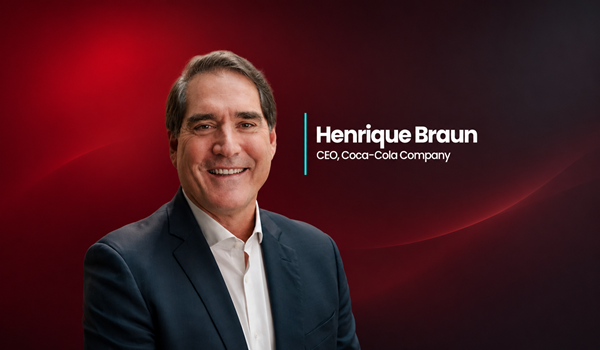
Coca-Cola’s global chief executive Henrique Braun was scheduled to visit India for three days as preparations continued for the planned initial public offering (IPO) of Hindustan Coca-Cola Holdings (HCCH), the beverage company’s Indian bottling arm. The Economic Times reported that Braun would meet bottling partners, employees, and bankers involved in the proposed listing, while also visiting local markets.
The visit was described as Braun’s first to India after taking over as chief executive in March 2026. It comes at a time when the company is giving greater attention to the Indian market, where affordable beverages, changing consumer preferences, and competition are shaping expansion plans. Coca-Cola India did not respond to the newspaper’s request for comment on the reported schedule.
According to draft documents filed with the Securities and Exchange Board of India, the HCCH IPO is planned entirely as an offer for sale of 997.5 million shares. This means the proceeds would go to selling shareholders rather than provide new funds for the company. Under the proposal, Coca-Cola’s ownership would fall from 60% to 45%. Jubilant Beverages, which owns the remaining 40%, is not expected to sell shares.
Reports have placed the proposed offering at around $1 billion, with earlier estimates suggesting approximately ₹9,500 crore. HCCH could receive a valuation of roughly $10 billion, although the final pricing and timing will depend on market conditions and the approval process. Jubilant Bhartia Group acquired its 40% shareholding for ₹12,500 crore in 2025, linking the bottling business with a group that also operates Domino’s Pizza in India through Jubilant FoodWorks.
HCCH reported revenue from operations of ₹11,663.2 crore in FY26, compared with ₹12,869.5 crore in FY25, a decline of about 9%. The company attributed the reduction to refranchising, which involved transferring certain bottling operations in northern and eastern India to independent bottling partners. That change affects how revenue is recorded and should be considered when examining the headline figures.
For bottlers and beverage sellers, distribution decisions affect availability, pricing, and how quickly stock reaches shops. As Coca-Cola expands partnerships, investors will be watching network performance and whether shifting demand translates into stronger sales and more reliable operating results over time.
India is currently Coca-Cola’s fifth-largest market and is expected by the company to move higher in its global ranking. Following a restructuring announced in January, the Indian business began reporting directly to Braun. Sanket Ray, formerly responsible for India and Southwest Asia, moved into a broader regional position overseeing Greater China, Japan, South Korea, and India.
On the September-quarter earnings call, Braun highlighted India as a growth market. He pointed to affordability, zero-sugar offerings, local tastes, and newer sales channels as key areas of attention. The company’s leading brands reportedly recorded double-digit volume growth in India.
Competition remains intense as beverage manufacturers and distribution networks seek more consumers. Coca-Cola’s Indian portfolio includes Coke, Sprite, and Maaza. Braun’s reported meetings and the proposed listing therefore arrive at a significant stage for the company’s operating model, investment structure, and ambitions in a fast-changing market.